1-855-QUOTEMR

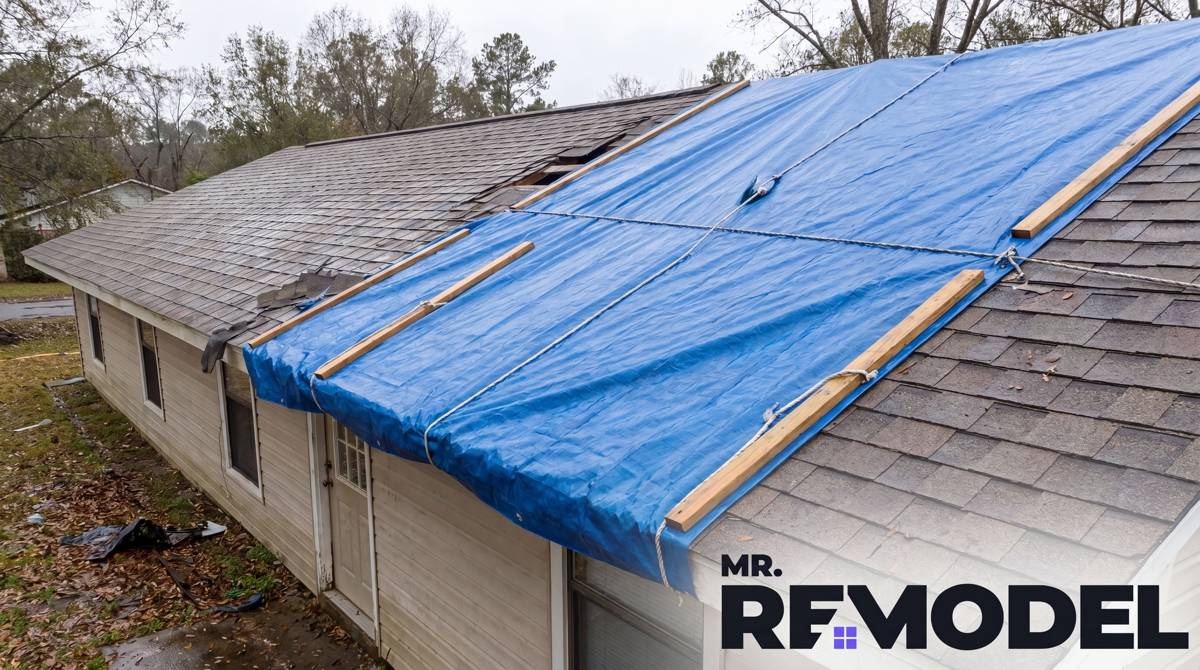
Table of Contents [hide]
Who This Is For
This guide is crafted for single-family homeowners experiencing an active residential roofing crisis. If your property has sustained sudden storm destruction, severe wind punctures, or destructive ice dam leaks, this text provides immediate steps to protect your home.
Key Takeaways
- Active Crisis Dispatch: Fast water mitigation within 0 to 1 days is required to stop structural degradation.
- Insurance Mandates: Standard homeowner insurance policies contractually require you to execute immediate temporary fixes to prevent secondary interior water destruction.
- The Replacement Funnel: Field data shows that emergency roof tarps serve as a temporary bridge, as most severe storm punctures require a comprehensive roof replacement.
- Regional Hazards: Extreme weather hazards drive emergency tarping needs, from golf-ball hail in Texas to high-velocity hurricane wind shear in coastal Florida.
- Cost Realities: Professional tarping projects generally incur a baseline expense of $200 to $1,500, varying directly with your home's roof pitch and overall square footage footprint.
Discovering a major water puncture in your residential building envelope during a severe storm is an incredibly stressful experience. When high winds rip away whole shingle layers or falling tree limbs puncture your decking, you enter a race against time.
According to storm response protocols from the National Weather Service’s Weather Severity Data, delaying your structural water protection efforts by even a few hours can cause catastrophic interior damage. Allowing wind-driven rain to pour freely into exposed attics will instantly compromise your insulation and short out ceiling electrical circuits.
Our internal project tracking across thousands of active properties reveals that 2,150 distinct homeowners, representing 12.5% of our entire roofing pipeline, demand field project deployment within a compressed 0 to 1-day timeline. These high-panic clients require immediate, professional assistance to stabilize their building envelopes.
At Mr. Remodel, we track these emergency project requests to help property owners transition safely from active interior chaos to long-term property stability. Managing the early hours of a structural breach correctly saves your framing from hidden structural rot.
Understanding Emergency Tarping and Structural Dry-In Mechanics
When your home envelope suffers a major puncture, you cannot wait for clear skies to schedule a full structural crew. You need an immediate professional team to execute temporary water diversion techniques.
Professional teams utilize heavy-duty, UV-resistant woven poly tarps designed to withstand high winds. Installers secure these protective covers using wood anchor strips screwed into structural rafters, ensuring the tarp does not blow away during subsequent storms.
The Technical Dry-In Standard
A proper structural dry-in involves more than throwing a blue plastic tarp over your ridge line. Teams must carefully smooth out the heavy-duty material, starting from the lower edge of your roof slope and working up toward the peak.
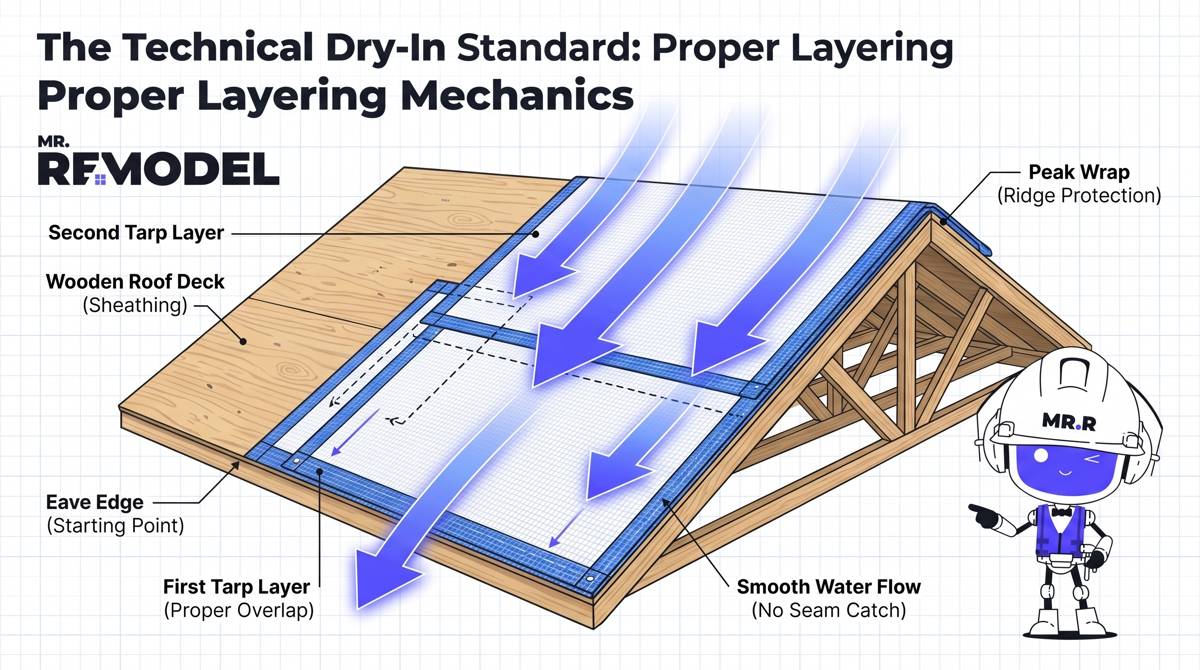
This layered installation technique mimics standard shingle configuration, allowing rainwater to slide smoothly over the plastic sheets without catching on the edges. Crews must pay close attention to valleys, dormers, and chimney flashings to ensure no water gets trapped beneath the vinyl.
According to post-disaster structural deployment briefs from the Federal Emergency Management Agency’s Blue Roof Information, using proper anchor weights and wrap techniques is essential to prevent wind lift. Flimsy temporary fixes installed without anchoring boards often rip away during the next rainstorm.
Evaluating Emergency Mitigation Costs and Insurance Obligations
Homeowners facing a sudden leak often worry about out-of-pocket costs. However, waiting to address a leak out of financial concern is a dangerous strategy that often results in much higher interior repair bills.
Standard professional roof tarping services generally cost between $200 and $1,500. Your final bill depends directly on the steepness of your roof pitch, the total square footage requiring coverage, and whether the work happens after hours.
Your Legal Duty to Mitigate Damage
Many property owners assume they should wait for an insurance adjuster to inspect the roof before touching anything. This common misconception can cause insurers to deny your secondary restoration claims.
Data from the Insurance Information Institute’s III Disaster Claims Guide confirms that homeowners are contractually obligated to mitigate secondary water damage immediately. Failing to protect an open roof puncture allows mold to grow, which insurance companies may decline to cover.
Hiring certified crews to secure an emergency tarp protects your property and creates a clear paper trail for your insurer. Adjusters prefer working with homeowners who take immediate steps to keep the interior structure dry.
Regional Weather Hazards and the Tarp-to-Replace Funnel
The underlying cause of emergency roofing calls varies significantly by geographic region. Our national operational tracking isolates clear weather patterns that drive emergency service calls across high-volume state markets:
- Texas: Sudden, severe spring hail storms shatter tile structures and crack underlying roof decking.
- Florida & Georgia: High-velocity tropical wind shear rips shingles away and drives water into exposed soffit lines.
- Ohio & Pennsylvania: Catastrophic winter ice damming forces standing water backward beneath shingles during freeze-thaw cycles.
The Temporary Nature of Emergency Tarps
Homeowners must remember that a roof tarp is a temporary band-aid, not a permanent fix. Polyethylene sheets degrade under constant UV exposure and will eventually leak if left in place for multiple seasons.
Our internal project data indicates that an additional 5,535 inquiries require professional intervention within 3 to 7 days of an initial breach. In total, 7,685 homeowners across our network experience intense, high-urgency timelines.
Our metrics reveal that despite these urgent timelines, only 156 applicants classify their long-term project needs as a basic patch repair. The vast majority of emergency calls lead directly to full system installations.
An emergency tarp serves as a critical bridge that protects your home while you navigate your insurance claims for roof damage. This temporary protection buys you the time needed to review options and design a resilient new roof.
See Related: Roof Leak Repair vs Full Replacement Cost
Vetting Fast-Response Contractors for Permanent Restorations
When dealing with a roofing crisis, it is tempting to hire the first handyman who shows up at your door with a ladder. However, hiring unvetted storm chasers often results in poor installations that cause more damage to your roofline.
Panicked property owners should watch out for red flags when hiring a roofing contractor, such as demands for large upfront cash deposits or a lack of local licensing. Certified local crews carry proper liability insurance and use professional safety gear to complete your temporary dry-in safely.
Once your emergency tarp is secure, you can take a breath and schedule a comprehensive assessment. Certified teams use a detailed roof inspection checklist to identify hidden deck rot and guide you toward permanent, same-day roofing solutions.
Investing in a proper restoration ensures your new roofing material matches your local climate. Checking your target material's lifespan by material and climate helps you select a durable system that eliminates future leak emergencies.
Evaluating your roof's age and condition will help you spot early signs that you need a new roof before the next storm hits. Taking a proactive approach to home maintenance is the best way to keep your family safe and dry year-round.
Stop letting active roof leaks ruin your interior ceiling, drywall, and attic insulation. Let Mr. Remodel match you with certified local fast-response crews today. Request a quote for emergency roof tarping to protect your home and preserve your property equity.
Frequently Asked Questions
How long can a professional emergency roof tarp stay on my house?
A professional tarp installation using wood anchor strips can protect your home for 30 to 90 days. This temporary coverage buys you the time needed to coordinate insurance approvals and schedule a permanent crew.
Will my homeowners insurance policy cover the cost of emergency tarping?
Yes. Most standard property policies cover emergency mitigation costs because homeowners are contractually obligated to protect the property from secondary water damage. Save all contractor receipts to submit with your claim.
What is the average professional cost for an emergency roof dry-in?
Professional tarping projects generally range from $200 to $1,500. Your true cost depends on your roof's steepness, the size of the damaged area, and whether the team deploys during severe storm conditions.
Can a homeowner install an emergency roof tarp as a DIY project?
Attempting to walk on a wet, steep roof during severe storm winds is extremely dangerous. Professional teams use specialized safety harnesses, heavy-duty materials, and proper anchor boards to secure the area safely.
How do services like Mr. Remodel assist during an active roofing emergency?
Platforms like Mr. Remodel help by instantly matching panicked homeowners with vetted, fully insured local contractors. This rapid matching ensures you secure fast emergency tarping to stop active leaks before major damage occurs.
Protect Your Home Envelope and Secure Your Property Assets
Navigating an emergency roof leak requires balancing immediate water mitigation against long-term insurance and construction realities. Acting within the first 24 hours prevents expensive interior mold growth and stops structural framing decay.
By securing a heavy-duty professional tarp, you buy the necessary time to design a permanent, high-performance roof asset. Professional water diversion protects your ceiling drywall, preserves your home value, and keeps your family safe.
Ready to clear the water and secure a reliable plan for your property? Get your free, no-obligation quote from Mr. Remodel to secure a rapid installation slot and complete your home restoration with total peace of mind.