1-855-QUOTEMR

Table of Contents [hide]
Who This Is For
This guide is for homeowners planning a bathroom renovation that may include fixture replacement, bathroom plumbing upgrades, shower work, tub changes, or a new layout. It will help you understand what plumbing work may be included before you compare quotes from bathroom remodeling contractors.
Key Takeaways
- Project Scope: A bathroom plumbing remodel can range from simple fixture replacement to full plumbing relocation.
- Shower Demand: Shower Upgrade is the most requested bathroom remodeling project type, with 9,762 leads in Mr. Remodel demand data.
- Conversion Work: Tub-to-shower conversions often require drain, valve, and supply line adjustments.
- Code Needs: Plumbing changes may trigger permit, inspection, and code requirements.
- Early Planning: Reviewing plumbing work early can help reduce remodel delays and avoid scope surprises.
A bathroom plumbing remodel includes the plumbing work needed to replace fixtures, upgrade wet areas, improve water efficiency, or change the layout of a bathroom. That may mean swapping a faucet, updating a shower valve, moving a drain, or rerouting supply lines during a complete bathroom remodel.
Many homeowners focus on tile, vanities, lighting, and design first. But the plumbing behind the walls and floors often determines what is possible, how complex the project becomes, and whether permits or inspections may be needed.
What Is a Bathroom Plumbing Remodel?
A bathroom plumbing remodel is any bathroom remodeling project that changes, replaces, repairs, or relocates plumbing fixtures or plumbing lines.
This can include work on sinks, toilets, tubs, showers, drains, valves, water supply lines, and venting. In some projects, the plumbing stays mostly in place. In others, the layout changes, and the plumbing must move with it.
Fixture Replacements Versus Plumbing Relocation
Fixture replacement is usually the simpler type of bathroom remodel plumbing work. This may include replacing a toilet, faucet, sink, showerhead, bathtub fixture, or shower trim while keeping the same basic plumbing location.
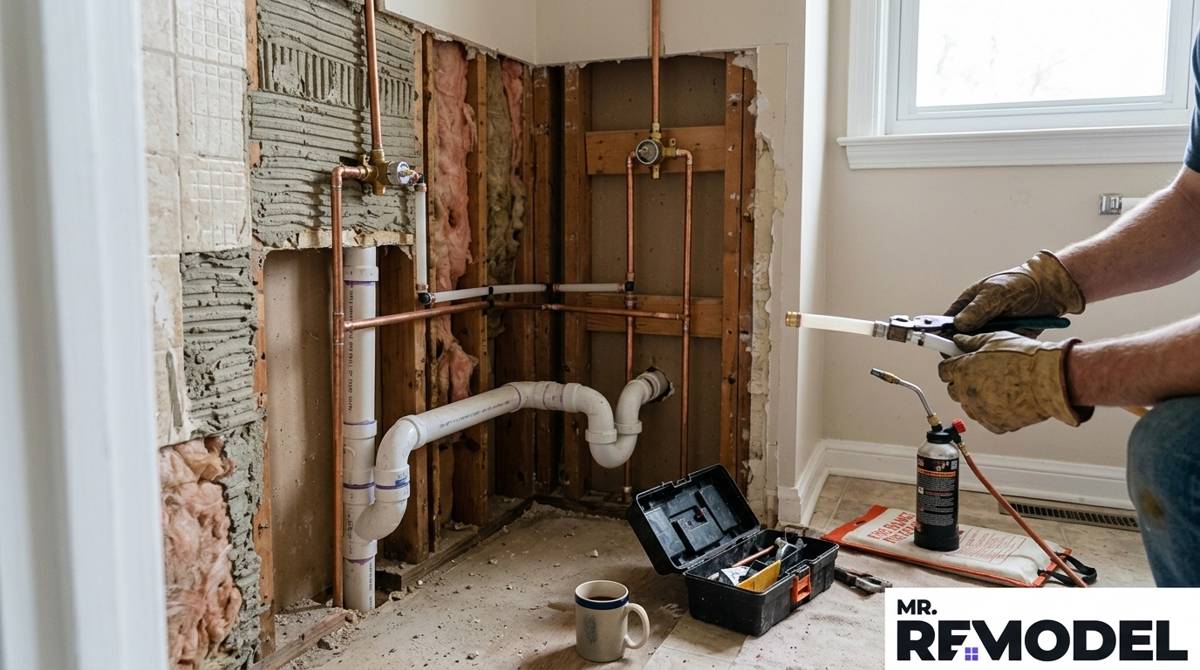
Plumbing relocation is more involved. It may be needed when a homeowner moves a toilet, changes a tub into a walk-in shower, shifts a vanity, or redesigns the bathroom layout.
What Plumbing Relocation Can Include
Plumbing relocation can involve:
- Moving water supply lines
- Adjusting drain lines
- Updating shutoff valves
- Changing shower or tub valves
- Modifying venting
- Opening walls or floors for access
Common Plumbing Components Updated During Remodeling
Bathroom remodeling projects often touch more plumbing than homeowners expect. Even a design-focused remodel may uncover older valves, worn drains, weak water pressure, or fixtures that no longer meet the needs of the household.
Common updates include bathroom plumbing fixtures, shower valves, bathtub drains, toilet connections, sink faucets, vanity plumbing, and water-efficient fixture upgrades.
What Plumbing Work Is Included in a Bathroom Remodel?
The plumbing work included depends on the size and goal of the remodel.
A smaller bathroom fixture replacement may only require removing old fixtures and installing new ones in the same locations. A shower upgrade may include a new shower valve, drain connection, showerhead, and waterproofing coordination around the wet area.
Small Fixture Replacement Projects
Small fixture projects usually keep the plumbing in the same place.
These may include replacing:
- Faucets
- Showerheads
- Toilets
- Sink drains
- Tub fixtures
- Shower trim
This type of bathroom plumbing renovation is usually less complex than changing the bathroom layout.
Shower, Tub, and Wet-Area Projects
Shower upgrades, bathtub upgrades, and tub-to-shower conversion projects often involve more plumbing coordination.
A contractor may need to check the drain, valve, water supply lines, and fixture compatibility before installing the new system. This is especially important when the new shower or tub has a different size, drain location, or fixture setup.
Complete Bathroom Remodel Plumbing Work
A complete bathroom remodel may involve several plumbing tasks at once. This can include replacing the toilet, updating the sink or vanity plumbing, modifying the shower or tub area, and checking whether older lines should be updated before walls are closed.
This is also when homeowners may consider water-efficiency improvements. The EPA WaterSense program supports the use of water-efficient fixtures that can reduce water use and improve bathroom efficiency.
Efficient plumbing fixtures can also reduce hot water usage, which may lower household energy demand. The U.S. Department of Energy notes that hot water use is part of household energy consumption, so fixture choices can affect more than water use alone.
Most Popular Bathroom Remodeling Projects Involving Plumbing
Mr. Remodel demand data shows that bathroom remodeling demand is strongly tied to wet-area upgrades and plumbing fixtures.
Tub and shower-related projects represent most bathroom remodeling activity. Single-family homes also account for the majority of bathroom remodeling projects.
Shower Upgrades
Shower upgrades are the highest-demand bathroom remodeling category in the data.
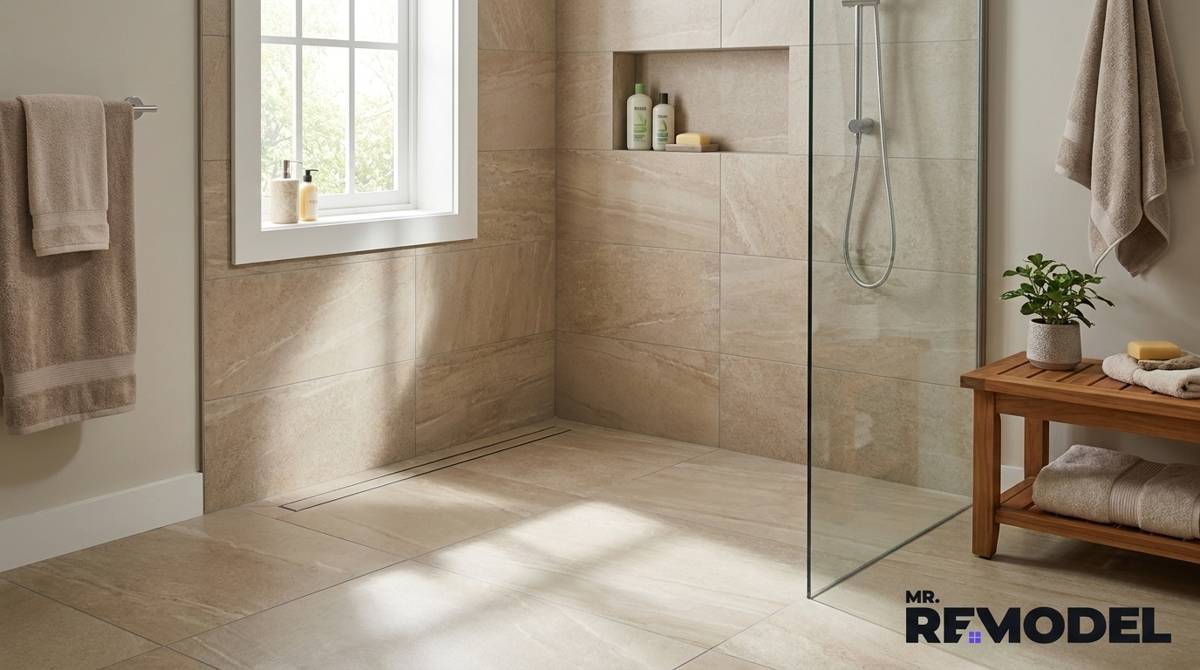
That makes sense because showers are used daily and often show wear faster than other parts of the bathroom. A shower upgrade may include a new showerhead, valve, drain, wall system, base, door, or accessibility feature.
See Related: Shower Only Remodel vs Full Bathroom Remodel: The 2026 Strategy
Tub-to-Shower Conversions
Bathtub-to-Shower Conversion is another major plumbing-related bathroom remodeling project.
A tub-to-shower conversion often requires more than removing a tub and installing a shower. The contractor may need to adjust the drain, update the shower valve, change the water supply connection, and make sure the new shower system is properly supported and waterproofed.
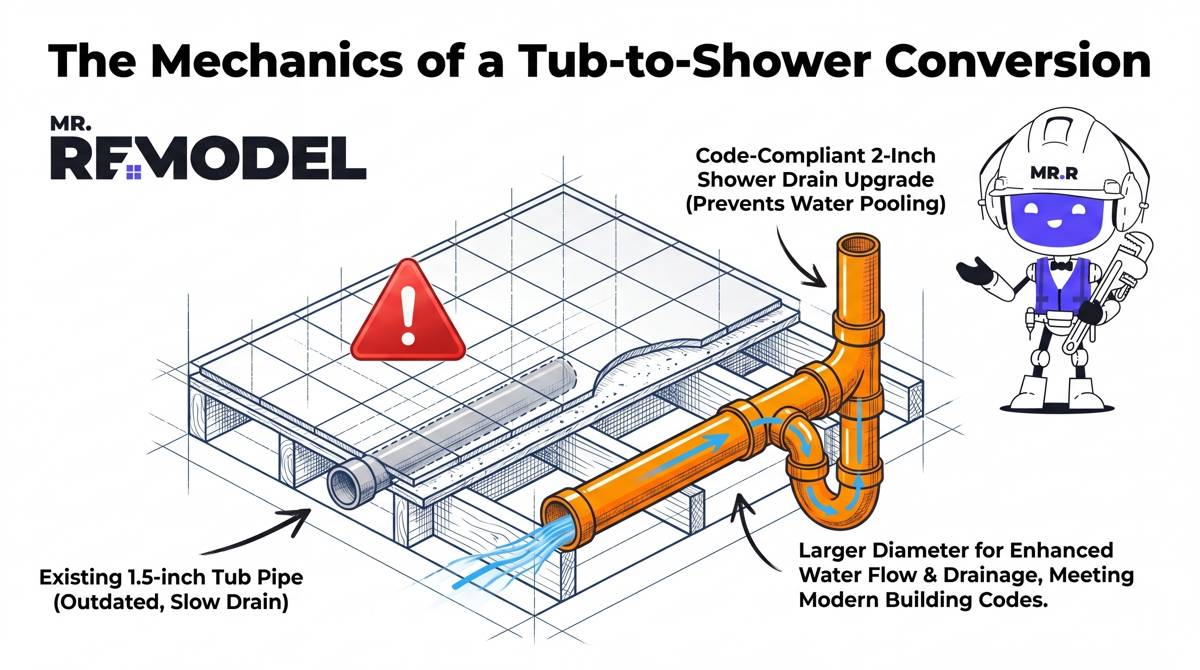
See Related: Tub-to-Shower Conversion Options: 2026 Design and Cost Guide
Complete Bathroom Remodels
Complete remodels represent approximately one-third of bathroom remodeling demand.
A complete bathroom remodel usually involves several plumbing decisions at once. Homeowners may replace the toilet, vanity, sink, faucet, shower, tub, or all wet-area fixtures during the same project.
See Related: Bathroom Remodeling Options and Methods
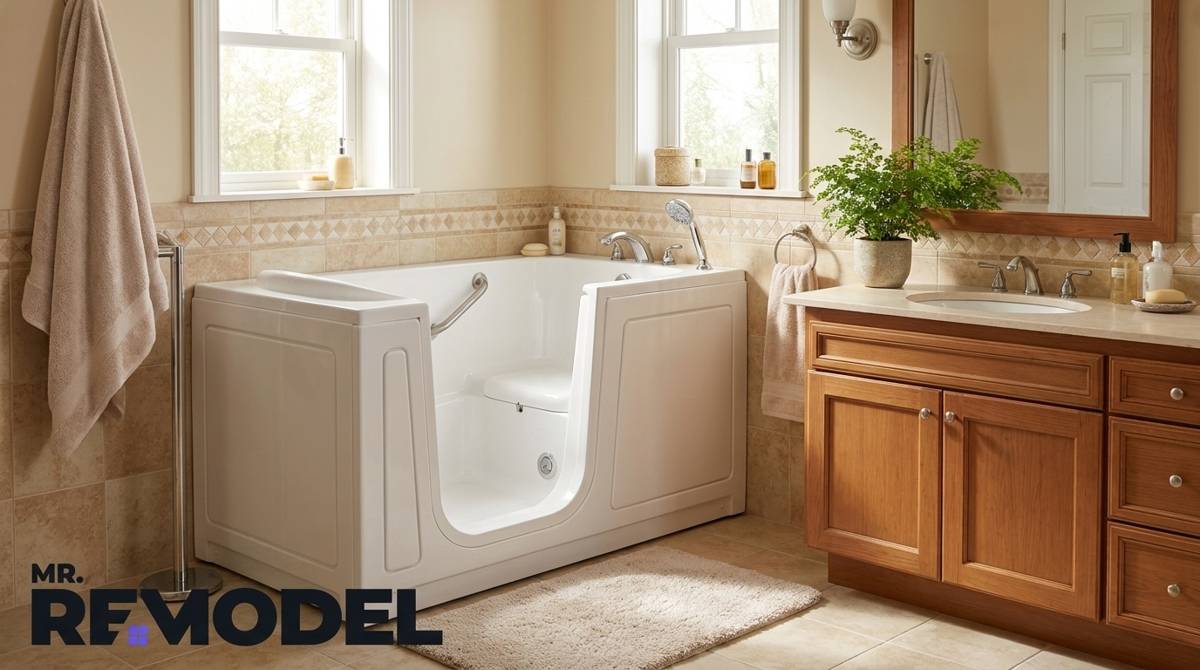
Bathtub Upgrades
Bathtub Upgrade generated the fewest inquiries.
This type of bathroom plumbing renovation may include replacing the tub, updating drain components, changing the tub faucet, or improving surrounding wet-area materials. It may also involve checking whether the existing plumbing works with the new bathtub style.
Ready to compare your options? Mr. Remodel helps homeowners connect with fully vetted local contractors so they can compare bathroom remodeling projects with more confidence.
When Should Plumbing Be Updated During a Bathroom Plumbing Remodel?
Plumbing should be reviewed early in the planning process, especially before tile, walls, flooring, or fixtures are finalized.
You may need bathroom plumbing upgrades if your existing fixtures are outdated, leaking, inefficient, hard to use, or no longer match the new design.
When Existing Plumbing Can Usually Stay
Existing plumbing may remain in place if the new fixture uses the same basic location and connection points.
This often applies to simple faucet replacements, toilet replacements, vanity swaps, and some shower upgrades. Even then, the contractor should still check the condition of visible valves, drains, and connections.
When Plumbing May Need to Move
Plumbing may need to be moved when the bathroom layout changes.
This can happen when you move a toilet, add a double vanity, convert a bathtub into a shower, or create a larger shower area. The more the layout changes, the more important it becomes to review drains, supply lines, and venting early.
When Older Parts Should Be Reviewed
Older plumbing parts may still work, but that does not always mean they are worth keeping.
If walls or floors are already open, it may be easier to replace aging valves, shutoffs, or connections during the remodel instead of waiting for a future repair. This can be especially helpful during a complete bathroom remodel.
Water-efficient upgrades may also be worth considering during bathroom fixture replacement. Fixtures such as WaterSense-labeled toilets, faucets, and showerheads can support lower water use while still meeting everyday bathroom needs.
See Related: Water Saving Toilets and Fixtures Explained
Do Bathroom Plumbing Remodels Require Permits?
Some bathroom plumbing remodels may require permits, especially when plumbing lines are moved, drains are changed, or major fixture locations are altered.
Permit rules vary by city, county, and state, so homeowners should not assume one national rule applies everywhere. Simple fixture swaps may not always require the same review as plumbing relocation or major bathroom remodel plumbing work.
Why Code Compliance Matters
Plumbing modifications may need to comply with current plumbing codes.
The International Code Council provides model code resources used by many jurisdictions to support building and plumbing safety standards. This is why plumbing changes should be reviewed before work begins.
What Homeowners Should Ask Before Work Starts
Before the project starts, ask your contractor:
- Will this project require a plumbing permit?
- Will inspections be needed?
- Are any drains, supply lines, or vents being moved?
- Will the new fixtures meet local code requirements?
- Who is responsible for permit paperwork?
Because requirements vary by location, homeowners should ask these questions early. Planning can help prevent delays later in the project.
See Related: Bathroom Remodel Timeline Explained: 2026 Action vs Reality Guide
Bathroom Plumbing Remodel Mistakes to Avoid
Plumbing mistakes can create delays, added costs, and design compromises. The biggest issue is waiting too long to discuss plumbing needs.
Choosing Fixtures Too Early
Fixtures should match the bathroom design, but they also need to match the plumbing setup.
A faucet, tub, shower valve, or drain system may not work with the existing plumbing without extra changes. Confirm compatibility before ordering materials.
Assuming a Tub-to-Shower Conversion Is Simple
A tub-to-shower conversion can be a smart upgrade, but it is not always a simple swap.
The project may require drain changes, valve updates, waterproofing coordination, and fixture adjustments. This is why the plumbing plan should be part of the early design conversation.
Skipping Permit and Code Questions
Some homeowners wait until work begins to ask about permits.
That can create delays if the project involves plumbing relocation or other code-related work. Ask about permits before demolition or fixture removal starts.
For more planning tips, read this guide on bathroom remodel mistakes before starting your project.
Frequently Asked Questions
Can I remodel a bathroom without moving plumbing?
Yes. Many bathroom remodeling projects keep plumbing in the same location. This is common for fixture replacement, shower upgrades, vanity swaps, and some bathtub upgrades. Keeping the same plumbing layout can make the project simpler than relocating drains or supply lines.
What plumbing fixtures are most commonly replaced?
Commonly replaced bathroom plumbing fixtures include toilets, faucets, sinks, showerheads, shower valves, tubs, and bathtub or shower drains.
Wet-area fixtures are especially common in remodeling projects. Mr. Remodel demand data shows strong activity around shower upgrades, tub-to-shower conversions, bathtub upgrades, and complete bathroom remodels.
Does a tub-to-shower conversion require new plumbing?
A tub-to-shower conversion often requires some plumbing modification, but the exact work depends on the existing layout.
The contractor may need to adjust the drain, update the valve, change fixture placement, or confirm that the water supply lines work with the new shower system.
Should I replace old plumbing during a complete bathroom remodel?
It may be smart to review older plumbing during a complete bathroom remodel, especially if walls or floors are already open.
This does not mean every pipe must be replaced. It means the contractor should check valves, drains, shutoffs, and fixture connections before new finishes are installed.
Planning a Successful Bathroom Plumbing Remodel
A successful bathroom plumbing remodel starts with knowing how much plumbing work your project really needs. A simple bathroom fixture replacement is very different from a layout change, tub-to-shower conversion, or complete bathroom remodel.
By reviewing plumbing early, asking about permits, and comparing qualified contractors, you can make better decisions before the project begins. To connect with fully vetted local bathroom remodeling contractors, use Mr. Remodel and get your free, no-obligation quote now.