1-855-QUOTEMR

Table of Contents [hide]
Who This Is For
This technical guide is designed for single-family homeowners living in severe storm territories who need to replace a damaged roof or fortify their property against future environmental hazards. If you want to understand the physical testing benchmarks of high-impact materials, analyze accurate upgrade price deltas, and maximize your insurance policy discounts, this resource is for you.
Key Takeaways
- The Volume Leader: Asphalt shingles remain the absolute benchmark for residential roofing, making up over 67% of all active installation inquiries.
- The Upgrade Premium: Upgrading from standard asphalt to a polymer-modified SBS Class 4 system adds a nominal 10% to 25% cost premium over standard project baselines.
- Insurance Alignment: Over 53% of roofing consumers operate on a stable 30-day timeline, which matches the standard post-storm insurance adjustment and funding phase.
- The Crisis Sector: Nearly 30% of property owners experience sudden roof failures that require complete field deployment within seven days to stop active water leaks.
- Geographical Risk Caps: High-impact configurations are heavily concentrated in the national hail belt, with project demand peaking across Texas, Colorado, and Oklahoma.
Are you dealing with split shingles, granular loss, or localized leaks following a severe thunderstorm? For homeowners living in storm-prone regions, choosing your next roofing material requires looking past standard aesthetic options and evaluating true structural resilience.
According to weather research from the Insurance Institute for Business & Home Safety’s Hail Performance Studies, traditional builder-grade shingles break down rapidly under repetitive freezing impact. Investing in advanced, impact-rated roofing materials is the most reliable way to fortify your home envelope against volatile weather and seasonal storms.
However, many property owners avoid high-performance upgrades because they lack clear data on true installation costs. At Mr. Remodel, we analyze thousands of active regional roofing projects to help you translate manufacturing codes into clear project economics.
The Testing Science Behind UL 2218 Class 4 Materials
To understand why impact-resistant shingles outperform standard options, you must look at how these systems are officially certified. Standard shingles utilize hard, oxidized asphalt that cracks easily when struck by high-velocity hail.
Premium Class 4 shingles are manufactured using polymer-modified asphalt, often blended with styrene-butadiene-styrene (SBS). This specialized rubberized chemistry provides incredible physical elasticity, allowing the shingle to flex and absorb sudden kinetic impacts without tearing the underlying fiberglass mat.
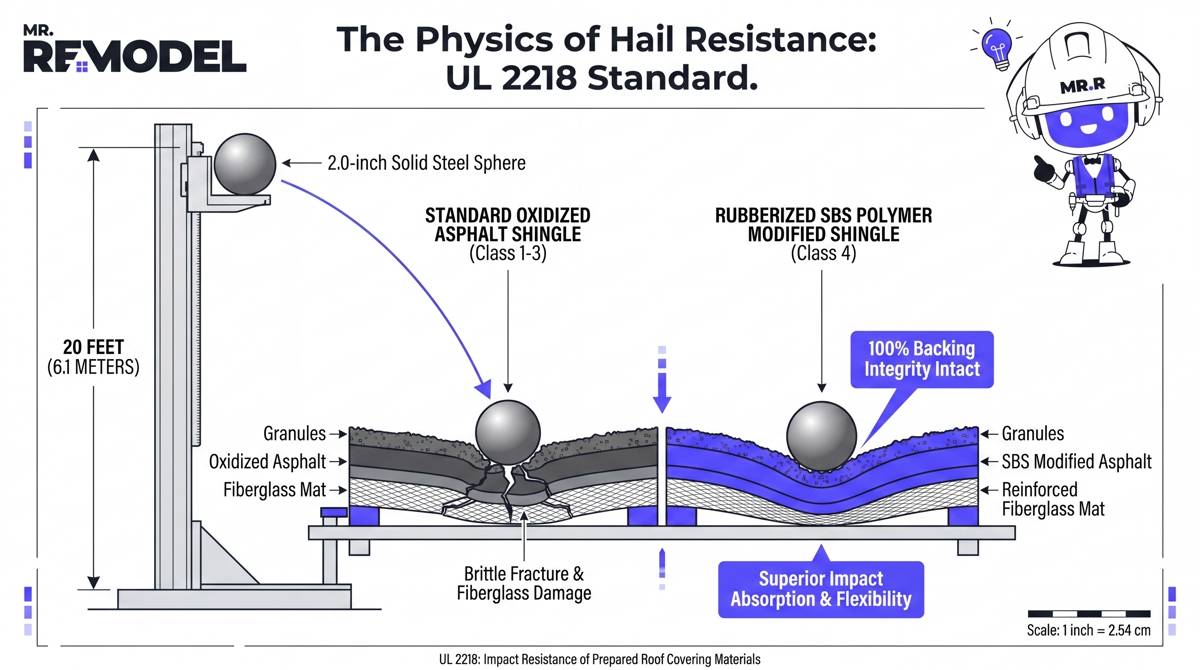
Formal technical testing briefs from IBHS UL 2218 Testing Methodology detail the strict testing requirements needed to achieve a Class 4 rating. Laboratory technicians drop a solid 2.0-inch steel ball from a height of 20 feet directly onto the shingle surface twice in the same spot.
A material only secures a Class 4 certification if the shingle backing shows zero cracking or tearing after multiple impacts. This flexible rubberized structure ensures your home envelope stays completely dry even after a severe storm.
Evaluating Upgrade Price Deltas and Project Economics
Transitioning to an advanced impact-rated roof requires balancing an elevated initial material layout against long-term equity protection. Property owners must compare this investment to the actual historical costs of standard setups.
Our verified multi-state contract data show that the average cost for a standard residential asphalt shingle installation is exactly $10,963.83. This volume standard serves as your core baseline when mapping out a hail-resistant upgrade path.
Upgrading to a rubberized SBS Class 4 setup adds a nominal 10% to 25% premium to your final contract. This adjustment moves your target investment to between $12,000 and $13,700 for a standard home footprint.
Lowering Premiums with Insurance ROI
While the upfront premium can seem daunting, Class 4 systems offer immediate financial returns through your homeowner's insurance policy. Because insurance carriers want to minimize expensive storm damage payouts, they offer substantial policy discounts for resilient materials.
Homeowners who install certified impact-rated systems can secure premium discounts of 20% to 35% annually. Over the lifespan of your roof, these consistent insurance savings can completely offset the initial material upgrade cost.
According to rebuilding manuals from the Federal Emergency Management Agency’s Design Guide for Hail-Prone Regions, installing impact-rated materials lowers future disaster mitigation outlays. Choosing durable upgrades shields your home from interior leaks and preserves your property value.
See Related: Asphalt Shingles: Cost, Lifespan, Pros & Cons
Managing Post-Storm Insurance Timelines and Urgency Windows
Our national project database highlights a massive consumer baseline for asphalt upgrades, recording over 67% of our entire roofing volume. Shifting weather patterns split these buyers into two distinct timeline tracks:
The 30-Day Insurance Adjustment Target
The largest segment of our database, 53.2% of homeowners, operates on a stable 30-day project window. This timeline aligns perfectly with the standard post-storm insurance adjustment and funding cycle.
Savvy homeowners use this adjustment window to upgrade to a superior material tier using their insurance payout funds. This approach allows you to secure an elite all-weather roofing construction setup while minimizing your out-of-pocket expenses.
The 7-Day Emergency Mitigation Crisis
Conversely, 29.8% of homeowners experience sudden roof failures that require complete field deployment within a 7-day window. This group includes over a thousand homeowners who demand immediate 0 to 1-day emergency dispatch due to severe storm damage.
Panicked buyers dealing with active water leaks need rapid structural tear-offs to protect their home interiors. Bypassing minor patch fixes and choosing full installations allows you to enjoy the benefits of asphalt shingle roofing with long-term peace of mind.
High-Risk Regional Targets and Climate Trends
The financial viability of a Class 4 upgrade connects directly to your local geographic hazard profile. Our internal business metrics track severe storm trends to show where high-impact setups deliver the highest asset returns:
Homeowners living in these high-volume markets deal with intense weather shifts where severe hail can compromise a standard roof in minutes. Upgrading to rubberized no-leak roofing materials keeps your home safe and dry through every major storm season.
Vetting Certified Specialty Installation Crews
Because polymer-modified SBS shingles require precise fastening and proper temperature ranges to seal correctly, you cannot trust this high-ticket project to an uncertified handyman. Finding licensed roofing specialists is essential to preserve your manufacturer warranty protection.
Certified teams use digital wind-load calculation tools to ensure your roof ventilation balances your home's thermal airflow perfectly. Partnering with professional contractors protects your home from premature leaks and builds lasting property value.
Stop risking structural water leaks with cheap, unrated asphalt shingles. Let Mr. Remodel connect you with fully licensed local installation experts today. Click here to get a free roofing quote and secure a durable, storm-resistant system for your property.
Frequently Asked Questions
What are Class 4 impact-rated shingles?
Class 4 shingles are premium roofing materials that have passed the strict UL 2218 impact test. They are typically manufactured using rubberized polymer-modified SBS asphalt, allowing them to absorb severe hail impacts without cracking or tearing.
How much do Class 4 impact-rated shingles cost compared to standard shingles?
A Class 4 upgrade generally commands a nominal 10% to 25% premium over standard asphalt installations. For a typical home footprint, the total cost ranges between $12,000 and $13,700, compared to our baseline standard project average of $10,963.83.
Will installing Class 4 shingles lower my home insurance premiums?
Yes. Because impact-resistant roofs minimize storm damage claims, major insurance carriers offer substantial premium discounts ranging from 20% to 35% annually. Check with your local provider to verify your regional rate credits.
Can an impact-rated roof handle extreme hurricane winds?
Absolutely. The modified polymer composition gives SBS shingles superior wind tear-off resistance compared to standard options. When installed with enhanced fastener counts, these systems can withstand wind gusts up to 110–130 mph.
How does Mr. Remodel streamline the post-storm roof replacement process?
Mr. Remodel takes the guesswork out of emergency renovations by connecting you directly with vetted local exterior specialists. This rapid matching helps you coordinate insurance approvals, secure specialized labor, and complete your project quickly.
Safeguard Your Home Envelope and Secure Lasting ROI
Investing in a Class 4 impact-rated shingle installation allows you to balance durable weather protection against smart insurance cost management. Preparing for local storm trends and choosing flexible polymer-modified systems avoids the high costs of frequent roof repairs.
Choosing a complete seamless replacement and partnering with factory-certified crews turns a routine maintenance chore into a powerful long-term property defense asset. Perfecting your exterior wind and water defense shields your structural framing, lowers your annual insurance overhead, and preserves your home equity.
Ready to secure a clear, high-performance plan for your home? Get your free, no-obligation quote from Mr. Remodel to analyze your local climate risks and launch your upcoming roof replacement with absolute confidence.