1-855-QUOTEMR

Table of Contents [hide]
Who This Is For:
Homeowners seeking one contractor to manage a multi-window project from measurement through final cleanup.
Key Takeaways:
- Define Full Service: Confirm every included service in writing.
- Compare Complete Scopes: Review products, labor, finish work, and disposal.
- Confirm Responsibility: Identify who handles measurements, ordering, permits, and inspections.
- Evaluate Capacity: Check crew availability for several openings.
- Review Warranties: Separate product coverage from workmanship coverage.
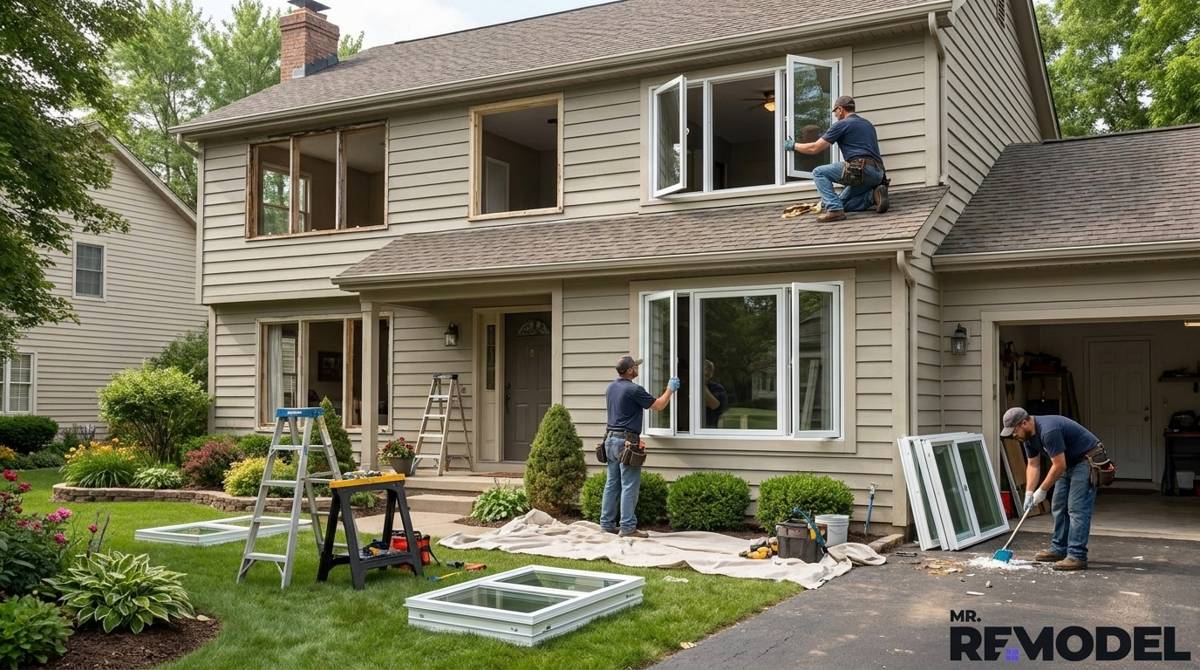
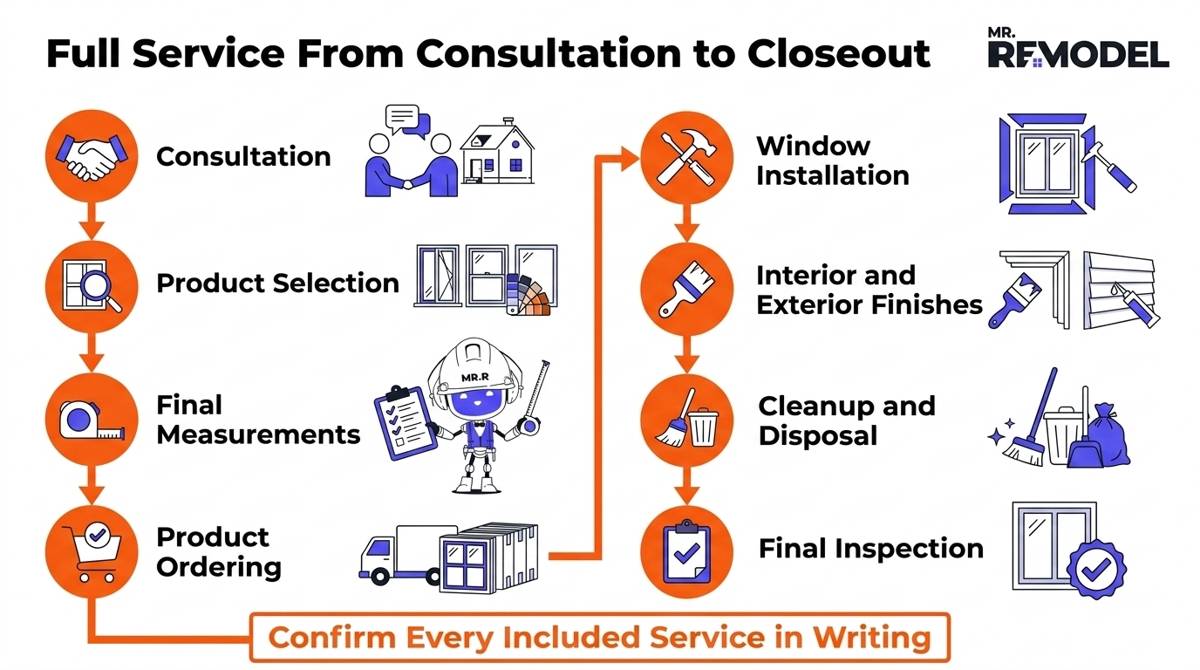
Hiring full-service window replacement contractors can simplify a project by placing consultation, measurement, ordering, installation, and closeout under one company. Because “full service” does not have one universal definition, homeowners should verify every included responsibility before comparing proposals.
Based on Mr. Remodel data, the median window installation inquiry involved five windows. Coordinating several openings requires an organized process that keeps measurements, products, installation details, and finish requirements connected through the final inspection.
What Full-Service Window Replacement Includes
A full-service contractor generally manages more of the project than an installation-only crew. The written proposal should establish where the contractor’s work begins and ends.
Common services may include:
- Consultation and product selection
- Final measurements and ordering
- Existing-window removal
- Opening inspection and preparation
- Window installation
- Flashing, insulation, and sealing
- Interior and exterior finish work
- Permits and inspections
- Cleanup and disposal
- Final operation and quality checks
Trim, painting, permits, repairs, and disposal are common areas where scopes differ. The proposal should identify who completes each task, including work assigned to subcontractors. It should also explain how the contractor handles incorrectly sized products, concealed damage, inspection corrections, and scope changes.
The Department of Energy’s Window Replacement Checklist emphasizes compliance with relevant codes, standards, manufacturer instructions, and installation specifications.
Consultation, Measurement, and Product Selection
The consultation should establish the project goals, existing conditions, preferred styles, and planned installation methods. Preliminary dimensions may be taken during this stage, but the company responsible for ordering should approve the final production measurements.
Create an Opening Schedule
Each window should receive a unique identification number. The schedule can record its room, dimensions, operating style, frame, glass, finish, hardware, installation method, and trim requirements.
The contractor can use this record to prepare the order, match delivered products with their openings, guide the installation crew, and complete the final inspection.
Confirm the Exact Products
The proposal should identify the manufacturer, product line, operating style, frame material, glass configuration, finish, screens, grilles, and hardware. A broad description such as “vinyl replacement window” does not provide enough information for an equal comparison.
If energy performance is a priority, review the complete product configuration and applicable ratings. ENERGY STAR guidance for residential windows explains that certified products are independently tested and rated, with qualification criteria that vary by climate zone.
See Related: Choosing a Window Replacement Contractor
Removal, Installation, and Opening Preparation
The contractor should determine whether each opening requires pocket or full-frame replacement. Pocket installation retains the existing frame, while full-frame replacement exposes more of the rough opening.
The selected method affects removal, preparation, flashing, insulation, trim, and finish work. It should appear in the proposal for every opening.
Inspect Before Installing
Once an existing window is removed, the crew may find deteriorated wood, damaged framing, moisture staining, or irregular dimensions. The contract should explain how these conditions will be documented, priced, and approved.
The crew should also verify that the delivered replacement matches the approved order before leaving an opening exposed.
Use a Complete Water-Management Approach
Caulk alone is not a complete flashing system. The appropriate method depends on the product, wall assembly, installation type, manufacturer instructions, and local requirements.
The Department of Energy’s guidance on fully flashed windows and doors describes properly lapped sill, side, and head flashing integrated with the wall’s drainage plane. This arrangement directs water outward instead of into the wall cavity.
Air sealing is a related but separate part of installation. The contractor should explain how the gap between the window and rough opening will be insulated and sealed. The Building America Solution Center provides technical guidance for air sealing window rough openings.
Interior and Exterior Finish Work
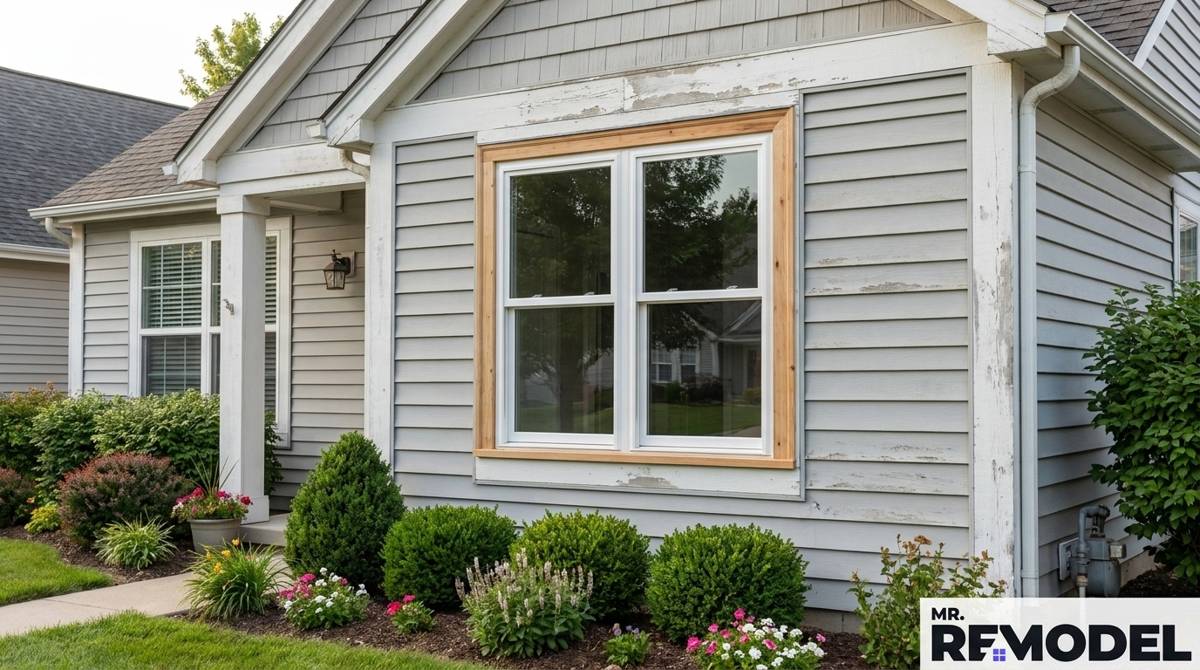
Finish work is one of the most important areas to clarify. A contractor may install the window while excluding painting, staining, drywall repair, siding repair, or decorative trim.
Ask what the completed opening will look like when the crew leaves. The proposal should state whether existing casing will be retained, reinstalled, or replaced. It should also identify responsibility for exterior trim, siding transitions, sealant, and paint-ready or fully finished surfaces.
Replacing casing is different from repairing damaged framing or reconstructing part of an opening. The contract should distinguish included finish work from repairs that require written authorization.
Ready to compare complete scopes for your replacement project? Get a free window replacement quote today.
Cleanup, Disposal, and Final Inspection
A full-service project should define cleanup rather than leaving it as a general promise. Ask whether the contractor removes old windows, glass, packaging, fasteners, sealant containers, and other installation debris.
The crew should protect floors, furniture, landscaping, and occupied areas. Daily cleanup may also be necessary when work continues across several days.
Complete an Opening-by-Opening Inspection
Before final payment, walk through the project with the contractor. Every window should open, close, lock, and remain in its intended position. Inspect the glass, screens, hardware, sealant, trim, finishes, and surrounding surfaces.
Record incomplete or damaged work in a written closeout list. The contractor should explain when each item will be corrected and which product and warranty documents will be provided.
Scheduling a Multi-Window Project
Based on Mr. Remodel data, 52.94% of window installation inquiries involved at least five windows, while 27.07% involved at least 10. A contractor handling this volume needs enough crew capacity to protect exposed openings, maintain consistent workmanship, and complete inspections without rushing.
Larger projects may require staged installation by room, floor, or elevation. Ask how many installers will be assigned and how the company will supervise quality across the crew.
Final measurements, ordering, manufacturing, delivery, installation, and closeout should appear as separate stages. Custom products and permits should also be included in the schedule when applicable.
Based on Mr. Remodel data, 95.07% of window installation prospects wanted to begin within 30 days. Starting the consultation early provides more time to compare scopes and coordinate the required stages.
See Related: Window Replacement Timeline
Product and Workmanship Warranties
A product warranty and a workmanship warranty address different parts of the project.
A manufacturer warranty may cover eligible defects involving the window, glass, seals, finish, or hardware. Review its coverage period, exclusions, registration requirements, transferability, and labor provisions.
A workmanship warranty addresses covered installation problems. Confirm its duration, claim process, exclusions, and service responsibilities. The agreement should also explain who coordinates the response when a concern could involve either the product or its installation.
FAQ About Full-Service Window Replacement Contractors
What does full-service window replacement include?
The scope may include consultation, measurements, product ordering, removal, installation, finish work, cleanup, disposal, and final inspection. Services vary, so every responsibility should appear in the written proposal.
Who takes the final window measurements?
The company responsible for ordering and installing the windows should take or approve the final production measurements. The contract should specify who is responsible for ordering accuracy.
Does full-service replacement include trim and finish work?
It may. Ask whether the proposal covers casing, exterior trim, siding transitions, drywall repair, painting, staining, and completed finishes.
Who handles permits and inspections?
Responsibility varies by contractor and location. The contract should state whether permits are required, who obtains them, who schedules inspections, and who addresses corrections.
Does the contractor remove and dispose of old windows?
Many full-service contractors include removal and disposal. The proposal should identify which materials will be removed and whether disposal charges apply.
How many windows can a contractor replace at once?
Capacity depends on the crew, window types, opening conditions, and installation methods. Based on Mr. Remodel data, 10 windows were the most frequently selected quantity, accounting for 26.65% of window installation inquiries.
Choose a Contractor With a Complete Project Scope
The right full-service contractor should connect measurements, products, installation, finish work, cleanup, and warranty responsibilities in one clear plan. Comparing written scopes helps homeowners understand what each company will manage and what the finished project should include.
Ready to plan your project from measurement through final cleanup? Get your free, no-obligation full-service window replacement quote today.