1-855-QUOTEMR

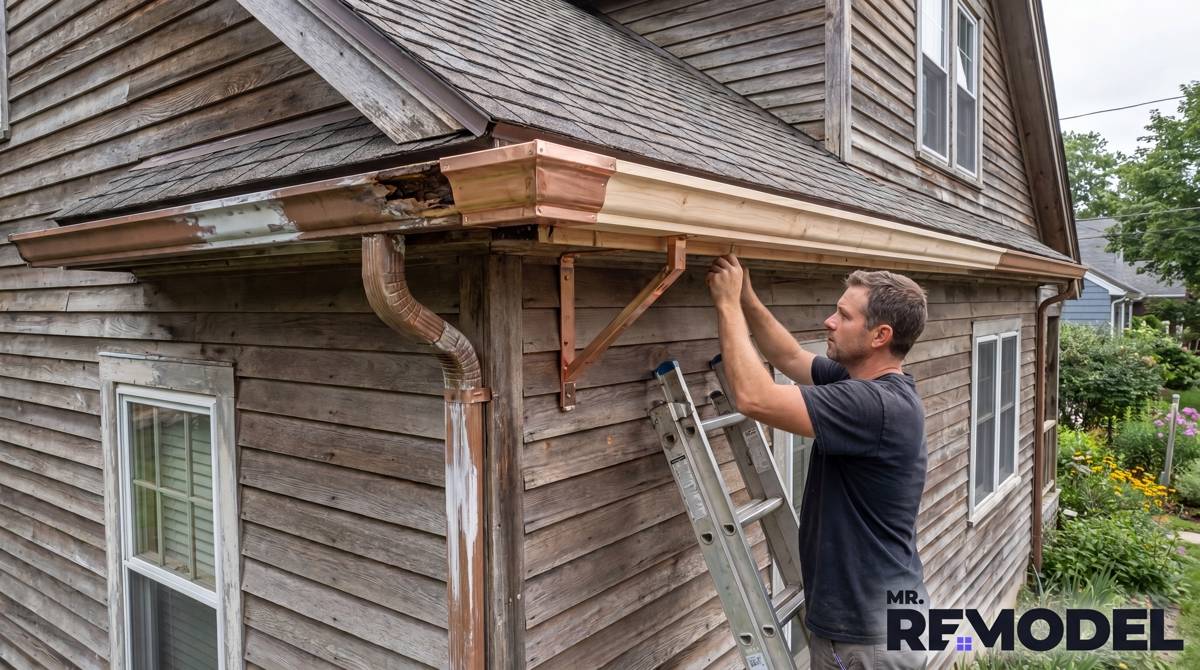
Table of Contents [hide]
Who This Is For
This guide is specifically crafted for historic homeowners and preservationists. It details the technical process of assessing timber rot, executing epoxy-based repairs, and maintaining the structural integrity of heritage gutter systems.
Key Takeaways
- The Heritage Value: Wood gutters are architectural assets that require specialized preservation techniques, not standard replacement.
- Rot Identification: Early detection of soft, spongy spots in timber troughs is the only way to prevent the total loss of original historic millwork.
- Modern Preservation: Marine-grade epoxies and wood-hardening resins allow for permanent repairs that preserve the original wood profile while adding waterproof durability.
- Seasonal Planning: With over 24% of repair demand peaking in January due to freeze-thaw cycles, proactive inspections in late autumn are essential.
- Professional Standards: Heritage home restoration requires precision from professional gutter specialists who understand the unique expansion and drainage requirements of timber troughs.
Wood gutters are a signature feature of many 19th and early 20th-century homes. Unlike modern aluminum, which often looks incongruous on a Victorian or colonial property, wood troughs are integral to the architectural profile. However, wood is naturally vulnerable to moisture intrusion, and without consistent maintenance, it will inevitably succumb to rot.
Understanding how to maintain these systems is the difference between preserving a home’s character and settling for a standardized exterior update. If your home has historic trim or original timber troughs, Mr. Remodel can help you connect with the right craftsman to protect these assets.
Diagnostic Assessment: Repair vs. Replacement
The first step in restoration is determining if the timber is fundamentally sound. Wood rot usually begins in the corners, joints, or sections exposed to prolonged dripping.
Identifying the Extent of Decay
Use a simple screwdriver to test the integrity of the wood. If the metal easily sinks into the timber, you have found an area of active rot. Before committing to custom milling, evaluating your leaking gutter repair costs can help determine if epoxy restoration is the better financial route.
Applying the 25% Rule
A standard industry guideline involves assessing the volume of wood loss. If more than 25% of the original timber thickness is compromised, restoration may be structurally impossible. Applying this 25% rule is standard practice when deciding whether to repair or replace sections of an aging timber trough.
Advanced Epoxy Restoration Techniques
Modern preservation technology has revolutionized wood gutter restoration. We no longer rely on simple wood fillers that shrink and pop out under thermal stress.
The Epoxy Hardening Process
Today’s best practice involves thoroughly cleaning the rotted wood and injecting a high-strength, wood-hardening resin. Once the resin cures, the area is built back up using a structural epoxy paste. This paste is then sanded to match the exact profile of your original gutter, creating a seamless, waterproof bond.
Material Longevity
It is important to remember how long different gutter materials last when considering these repairs. While copper and aluminum alternatives are often approved by historic societies for their longevity, a properly restored wood gutter can last for decades if the interior is lined with modern waterproof membranes.
Regional Risks and the Freeze-Thaw Cycle
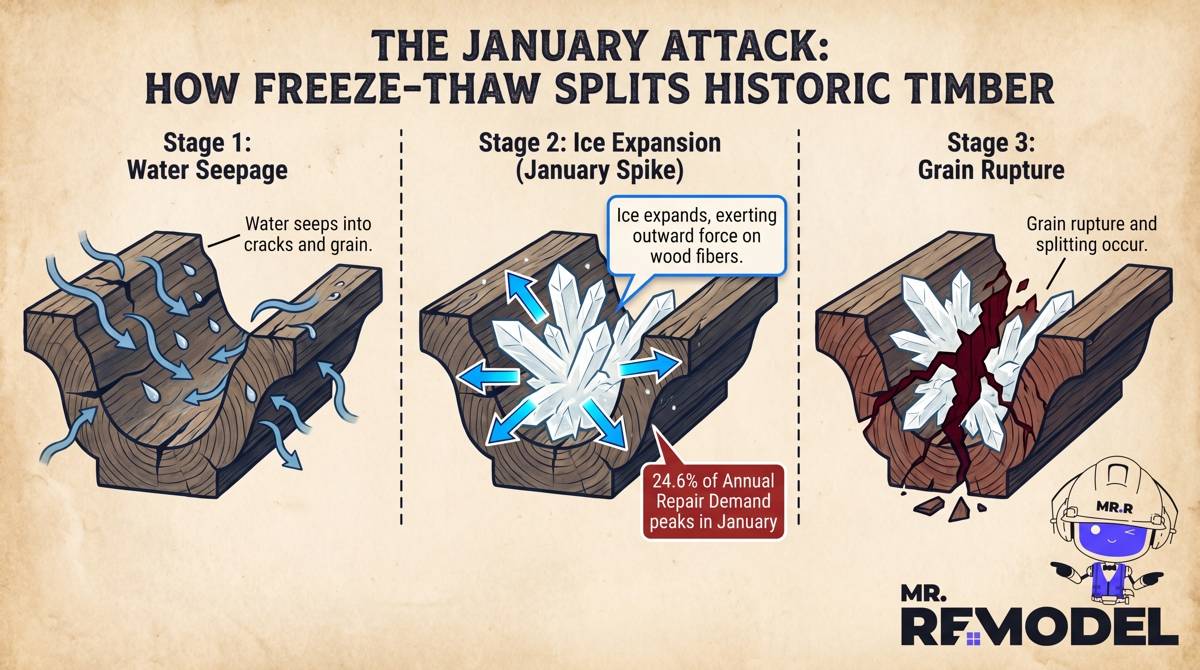
Our data indicates that 24.6% of repair demand occurs in January, confirming that winter is the most dangerous time for wooden troughs.
- Winterization Risks (NY/NJ/OH): Freeze-thaw cycles cause water to expand inside wood pores, literally splitting the timber grain.
- Coastal Humidity (FL/NC): High moisture levels accelerate organic decay. If the wood has been compromised, it requires aggressive treatment to stop internal rot before it moves to the fascia boards.
If you find that the rot has spread beyond the gutter and into the structure itself, you may need to consult a comprehensive replacement pricing guide to budget for full-scale removal and repair of the underlying fascia.
Frequently Asked Questions
Is it cheaper to repair or replace wood gutters?
For most historic homes, repair is significantly cheaper and preserves the architectural character of the building. Replacement requires expensive custom milling and custom installation.
How do I know if the rot is too deep?
If the rot has traveled into the fascia board or the rafter tails, the repair becomes much more complex. A professional should assess whether the structural supports are still sound.
Can I line my wood gutters to prevent future rot?
Yes. Installing a high-quality EPDM or liquid-applied membrane inside the wood trough is the single most effective way to prevent future water contact, effectively turning your wood gutter into a "shell" for a waterproof system.
Why does January see such high demand for repairs?
January is peak season for freeze-thaw damage. Ice dams form inside the gutter, expanding as they freeze and creating cracks in the wood grain that cause significant leakage once they thaw.
How can I find the right person for this project?
Historic wood gutter work is a specialized craft. You need a contractor who understands wood expansion, proper epoxy preparation, and historic preservation standards.
Preserve Your Historic Exterior
Restoring your home’s original wooden troughs is a dedicated commitment to its history and aesthetic value. While it requires more attention than modern aluminum, the beauty and historical ROI are unmatched.
If you are ready to address your wood gutters, reach out to the professional network at Mr. Remodel. Get your free, no-obligation quote and connect with experienced contractors who prioritize preservation over replacement, ensuring your home retains its unique character for years to come. Contact us today to start your renovation plan.