1-855-QUOTEMR

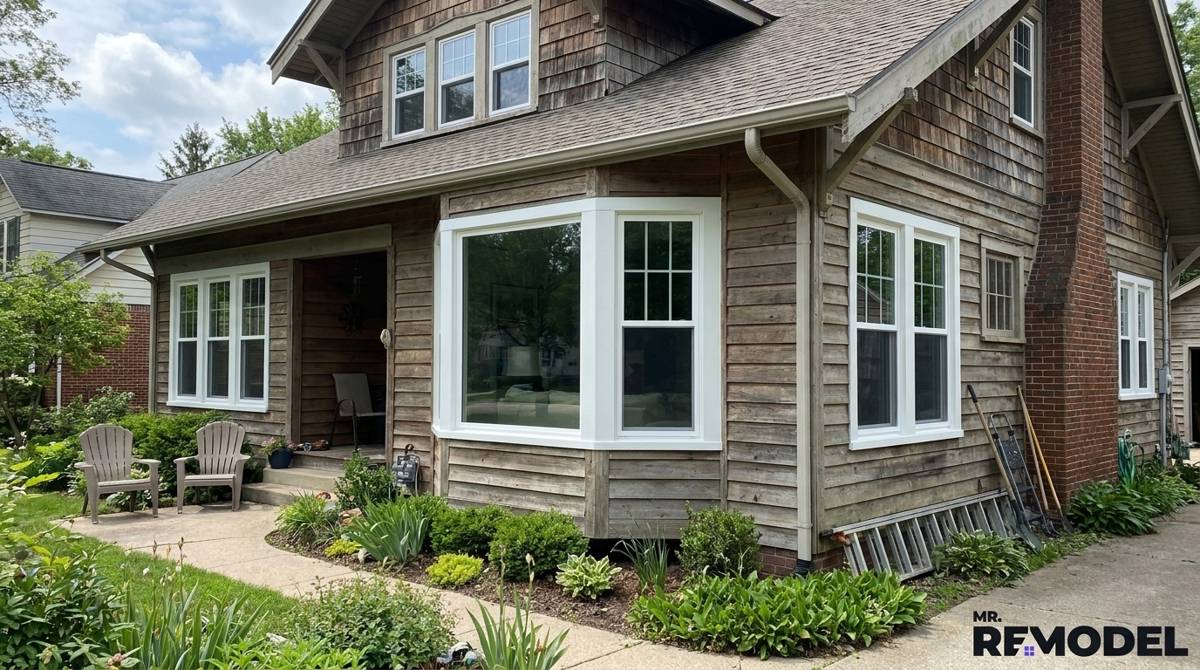
Table of Contents [hide]
Who This Is For
This guide is written for homeowners entering the planning phase of an exterior home upgrade. If you are tired of misleading retail prices and need a realistic financial baseline for your budget, this data-backed report provides the clarity necessary to make an informed decision before hiring a professional.
Key Takeaways
- Unit Baseline: The true fully-burdened unit cost for a professional installation averages $2,834.44.
- Median Investment: A standard market-center project involving six windows typically costs $14,659.00.
- Project Scope: Homeowners replace an average of 6.06 windows to achieve optimal thermal efficiency.
- Regional Spikes: Localized climate demands in states like Colorado can push estimates above $25,000.00.
- Planning Cycle: Approximately 60.1% of the market spends at least 30 days planning their budget.
A $350 window at a hardware store is just glass sitting on a shelf, not a functional thermal barrier for your home. The actual cost for replacement windows involves far more than the product price. Mr. Remodel analyzes real financial data to help you build a budget that accounts for professional installation and custom labor.
A professional installation is a complex structural project that involves far more than just the window unit itself. In 2026, the market has shifted toward high-efficiency, full-scale replacements that protect your property for decades.
The Reality of Fully-Burdened Installation Costs
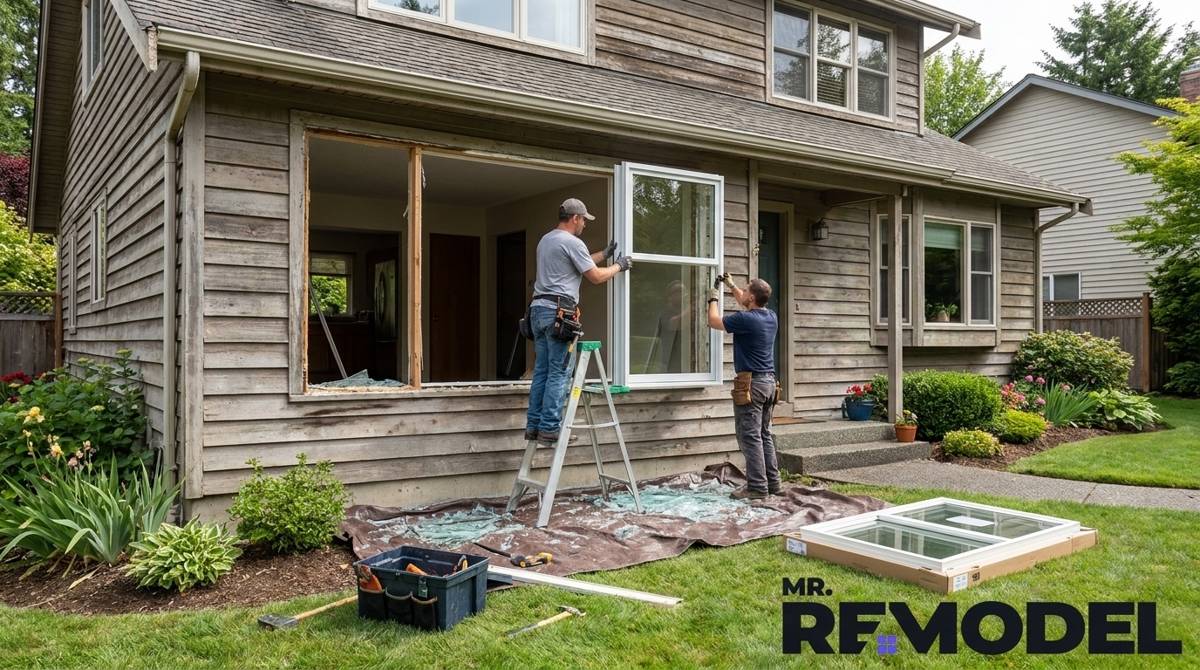
When you receive a professional estimate, you are paying for a fully-burdened service rather than a simple product. Our 2025 dataset reveals that the cost per window averages $2,834.44. This figure represents the total capital required to move a project from a custom measurement to a final structural inspection
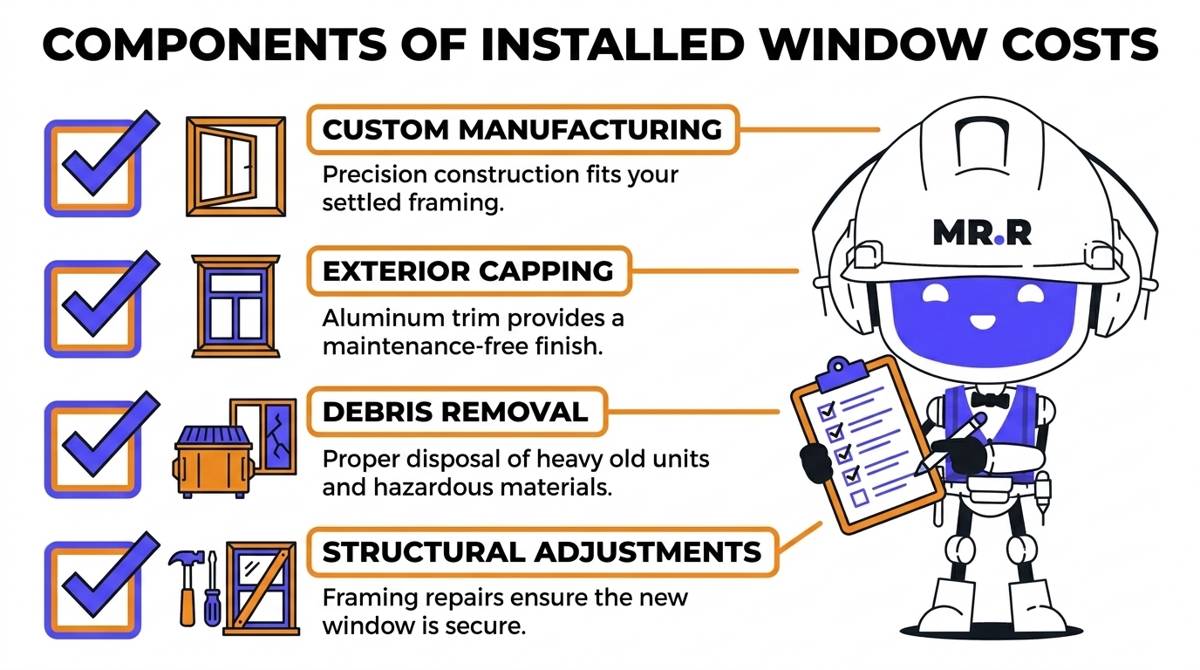
This list explains the primary factors that determine your total installation labor and material expenses.
- Custom Manufacturing: Precise construction ensures the unit fits the exact quarter-inch of your home framing.
- Exterior Capping: Installers fit custom aluminum over exterior wood trim for a maintenance-free finish.
- Debris Removal: Licensed professionals handle the disposal of old, heavy units and any lead-based paint.
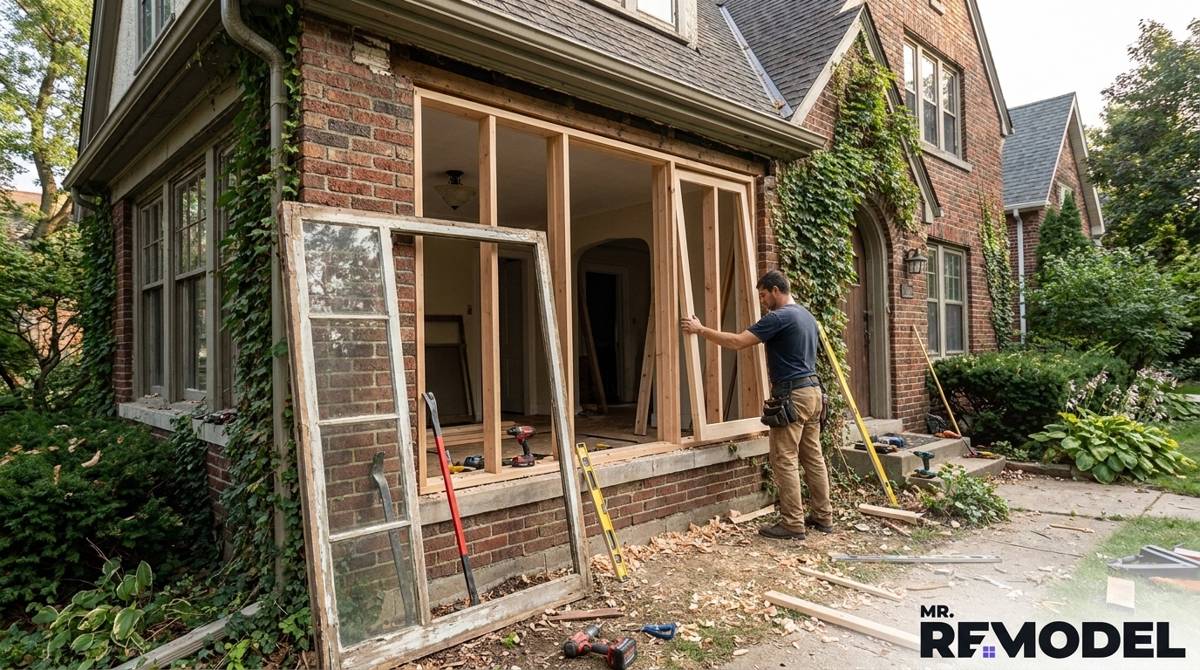
- Structural Adjustments: Older homes often require framing repairs after the old window is removed to keep the structure level.
This price accounts for custom manufacturing to fit your home's unique settling and framing. The U.S. Department of Energy emphasizes that proper air sealing and professional labor are non-negotiable for achieving actual energy efficiency. Proper installation prevents the structural rot often hidden within the walls.
See Related: Energy Efficient Windows | 2026 Ratings, Costs & Savings Guide
The Phase-One Strategy for Managing Home Expenses
Most homeowners do not replace every window in their house at the same time. Our data shows that the average project involves 6.06 units. This manageable scope allows for a strategic upgrade that targets the most problematic areas of the home first. You can achieve a high Return on Investment (ROI) by focusing on the most weathered side of the property.
Why the 6-Window Scope Works
These factors demonstrate why a targeted project size is the most efficient way to manage your renovation budget.
- Installation Efficiency: Contractors can often complete six windows in a single day to reduce labor overhead.
- Consistent Aesthetics: Replacing all units on one facade ensures your home's curb appeal remains uniform.
- Volume Pricing: Many contractors offer better unit rates when you bundle a half-dozen windows together.
- Immediate Comfort: Solving drafts in a primary living area provides instant relief for your family.
A standard 6-window project averages $14,659.00 in the current market. By focusing on a specific floor or a single facade, you can maximize results without the financial strain of a full-gut renovation. ENERGY STAR criteria validate that focusing on the most heavily impacted side provides the best return.
Get your free, no-obligation quote now from the Mr. Remodel network to see how these median prices apply to your specific project.
See Related: How Much Do New Windows Save on Cooling Bills | $16k Cost vs. ROI
How Geography and Climate Drive Your Project Estimates
Your physical location is one of the most significant variables in your final bill. While the national average project cost is $17,187.54, homeowners in certain regions face much higher baseline costs. This is rarely due to simple markups and is almost always driven by climate-specific material requirements and local building codes.
Why Regional Costs Vary
This breakdown identifies the specific environmental factors that drive up window prices in the West and Pacific Northwest.
- High-Altitude UV Protection: States like Colorado require specialized glass to handle extreme freeze-thaw cycles.
- Coastal Moisture Barriers: Installations in Oregon require advanced seals to prevent salt-air corrosion.
- Thermal Integrity: Extreme temperature swings require fiberglass or composite frames rather than builder-grade vinyl.
- Structural Reinforcement: High-wind zones require deeper embedment and specialized fasteners for safety.
For example, projects in Colorado average $25,831.06 due to these technical needs. The Lawrence Berkeley National Laboratory provides the research that justifies these regional price spikes. Their data confirm that high-altitude glazing and coastal thermal dynamics require a much higher capital investment to ensure long-term performance.
See Related: Window Costs and Value | Real Project Data & ROI Guide
Frequently Asked Questions
Why is the professional cost so much higher than retail prices?
Retail prices usually represent a low-quality unit without a frame, labor, or a warranty. The professional cost includes custom manufacturing and the skilled labor required to ensure a weather-tight seal that lasts.
Can I save money by replacing all my windows at once?
While the total project cost is higher, the per-window labor rate often drops when you bundle units. Contractors save on mobilization costs and debris disposal, which allows them to offer more competitive rates for larger scopes.
How long does the average homeowner take to plan this budget?
Our data shows that over 60% of homeowners operate on a 30-day planning timeline. This allows enough time to research material tiers and compare itemized estimates from fully vetted local professionals.
Securing Accurate Estimates for Your Remodel
Establishing a realistic budget for your home renovation requires looking past the artificially low prices advertised in store circulars. A true professional-grade project is an investment in your home's structural integrity and energy performance. By understanding that the median project center is $14,659.00, you can enter the market with confidence.
Do not let vague online calculators or out-of-state call centers dictate your expectations. Every home has unique framing and climate challenges that require a local perspective. By adopting a phased approach and investing in high-quality glass technology, you protect your property for decades to come.
The Mr. Remodel network specializes in connecting you with the highest-rated local contractors in your area. We take the guesswork out of the remodeling process by ensuring you work with professionals who respect your budget and your timeline. Get your free, no-obligation quote now and take the first step toward a more efficient home today.