1-855-QUOTEMR

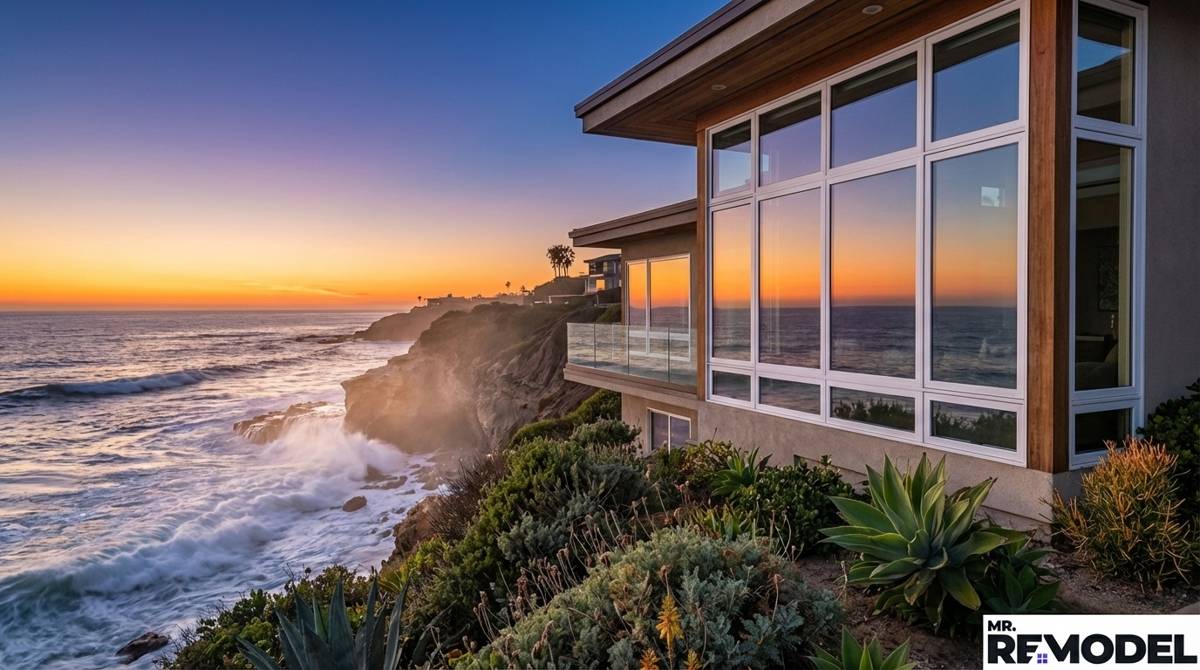
Table of Contents [hide]
Who This Is For
This guide is designed for homeowners in San Diego coastal communities like Point Loma, Ocean Beach, and La Jolla. It is specifically meant for those who need durable, corrosion-resistant window replacements that can withstand harsh Pacific salt spray while meeting local building codes.
Key Takeaways
- Material Choice is Critical: Vinyl and fiberglass are superior to aluminum or wood for coastal durability.
- Hardware Matters: Always specify Grade 316 stainless steel hardware to prevent "salt pitting" and mechanical failure.
- Fast-Track Permitting: Most window replacements in San Diego qualify for a No-Plan Building Permit, which significantly speeds up project timelines.
- Local Timing: San Diego homeowners are traditionally ready to begin installation within 15 days of their initial search.
- Project Scope: The average local project involves replacing approximately five windows, making phase-based upgrades a viable budget strategy.
Coastal living in San Diego is tough on homes; Pacific salt air and high humidity corrode standard window hardware quickly, sometimes in under five years. When seeking San Diego window installers, choose experts who know the needs of our specific coastal microclimates.
According to the National Oceanic and Atmospheric Administration (NOAA), salt spray can be carried several miles inland, meaning even homes in Clairemont or Mira Mesa are not entirely immune to the salt attack. This guide breaks down how to choose the right materials and navigate the local permit process to ensure your new windows last for decades.
The Reality of Living Near the San Diego Coast
The Pacific Ocean offers incredible views, but it also presents a unique challenge. Salt spray is tossed into the air by breaking waves and carried inland by onshore winds. According to the FEMA Coastal Construction Manual, salt spray accumulates on metal surfaces and accelerates the electrochemical processes that lead to rapid corrosion.
For a homeowner in zip codes like 92106 or 92107, a standard window might show signs of hardware failure or frame pitting in just a few years. Understanding how to select materials that resist this corrosive process is the difference between a 10-year and a 30-year investment.
Why Standard Windows Fail in San Diego Microclimates
Most windows are designed for inland environments where the air is dry and free of salt. In San Diego, our humidity and salt-heavy air create a corrosive soup. When salt sits on a window frame, it attracts moisture from the air. This moisture stays on the surface longer than pure water would.
The Problem with Aluminum Frames
Aluminum is often praised for its strength. However, in coastal environments, aluminum undergoes a process called pitting. This happens when the protective oxide layer on the metal is broken down by chloride ions from the salt. Over time, the frames look chalky and can eventually leak.
Why Wood Frames Struggle
Wood is a natural insulator, but it is highly porous. The moisture from the marine layer can seep into the wood, leading to rot or warping. Even if the wood is painted, the salt can get behind the paint at the joints, causing the finish to bubble and peel.
Best Materials for Coastal Durability
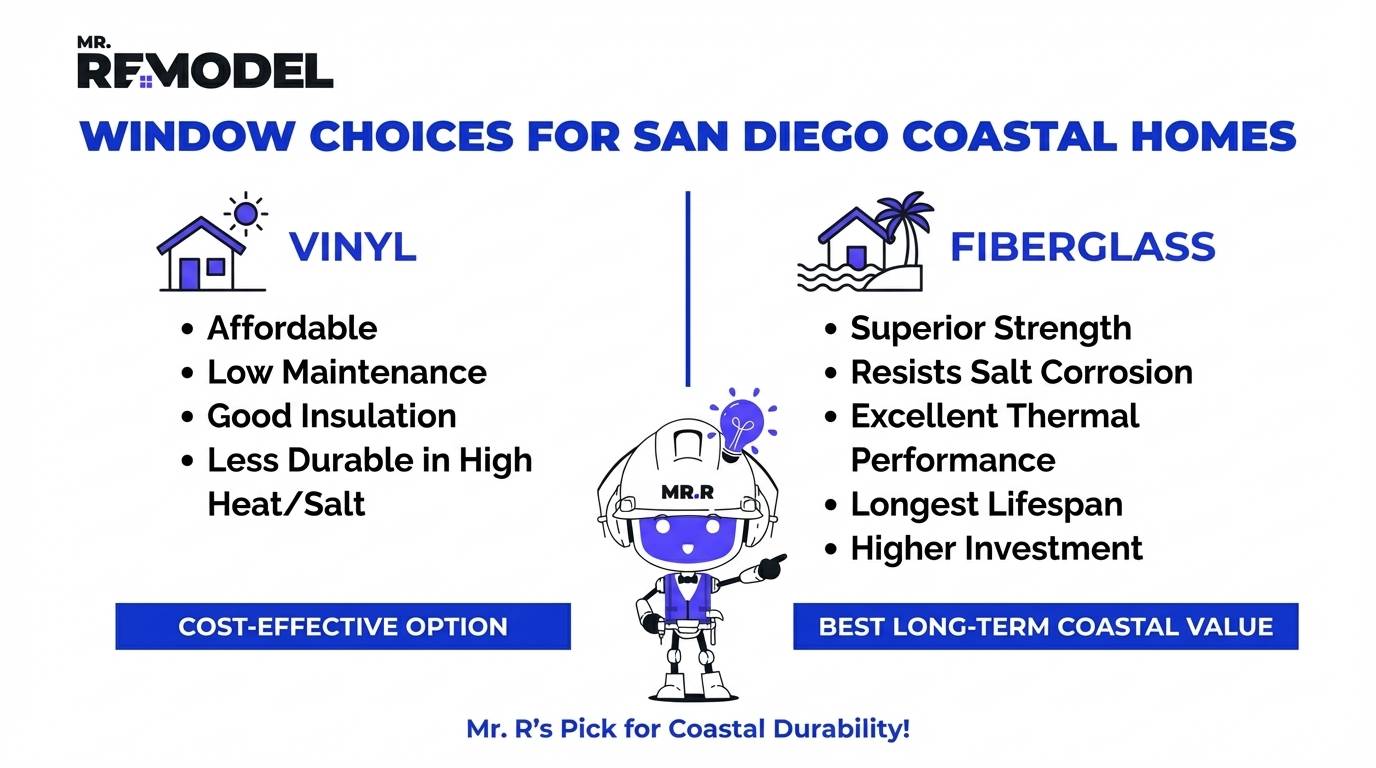
When choosing new windows for a San Diego home, you want materials that are naturally inert to salt. Based on industry performance data, two materials stand out as the top choices for coastal residents.
High-Quality Vinyl Windows
Modern vinyl is made from uPVC (Unplasticized Polyvinyl Chloride). This material does not rust, pit, or corrode. It is also an excellent insulator, which helps meet the ENERGY STAR requirements for Southern California.
Fiberglass Windows
Fiberglass is perhaps the ultimate coastal material. It is made from glass fibers and resin. Because it is essentially made of the same material as the glass itself, it expands and contracts at the same rate. This prevents seals from breaking. Fiberglass is also impervious to salt spray and moisture.
The Importance of Coastal Grade Hardware
It is a common mistake to focus only on the window frame. The hardware (the hinges, locks, and operators) is actually the most vulnerable part of the window. If the hardware rusts shut, the window becomes a safety hazard.
Grade 316 Stainless Steel
When shopping for windows, you must ask for coastal grade hardware. This usually means it is made from Grade 316 stainless steel. As noted in the Stainless Steel for Coastal Corrosion Handbook, Grade 316 contains molybdenum. This specific element significantly increases the metal’s resistance to salt-induced pitting compared to the more common Grade 304.
PVD Coatings
Physical Vapor Deposition (PVD) is another technology to look for. This is a finish applied to hardware that is much tougher than traditional plating. It creates a molecular bond that is nearly impossible to scratch or corrode.
|
|
Navigating the San Diego No-Plan Building Permit
Many homeowners worry that getting a permit for window replacement will take months. Fortunately, the City of San Diego offers a streamlined process called a No-Plan Building Permit (Information Bulletin 203).
What Qualifies for a No-Plan Permit?
If you are doing a "like-for-like" replacement, you can often get your permit over the counter. This means:
- The window is the same size as the existing one.
- The window type (e.g., sliding or casement) remains the same.
- There are no changes to the structural opening.
When You Need a Full Plan Review
You will need a more detailed review if you are:
- Increasing the size of the opening.
- Adding a window where one did not exist before.
- Living in a designated Historic District.
Working with a contractor who understands these local nuances can save you weeks of waiting. Mr. Remodel can connect you with a qualified San Diego window installation pro. Get your free, no-obligation quote today.
Energy Efficiency and San Diego Climate Zones
San Diego falls into a specific climate zone that requires a balance between keeping heat out in the summer and warmth in during those chilly marine-layer mornings. The California Energy Commission Title 24 Standards mandate specific U-factors and Solar Heat Gain Coefficients (SHGC).
- U-Factor: This measures how well the window keeps heat inside. For San Diego, a lower U-factor is better.
- SHGC: This measures how much solar radiation enters through the glass. In our sunny climate, a low SHGC is vital to keep your cooling bills down.
Cost Breakdown for San Diego Window Replacements
While prices vary based on brand and custom features, there are standard market numbers you can use for your 2026 budget. On average, a mid-range window replacement in San Diego costs between $750 and $1,200 per unit, including labor.
Factors Influencing the Price
|
WINDOW TYPE |
ESTIMATED COST (PER UNIT) |
BEST USE CASE |
|
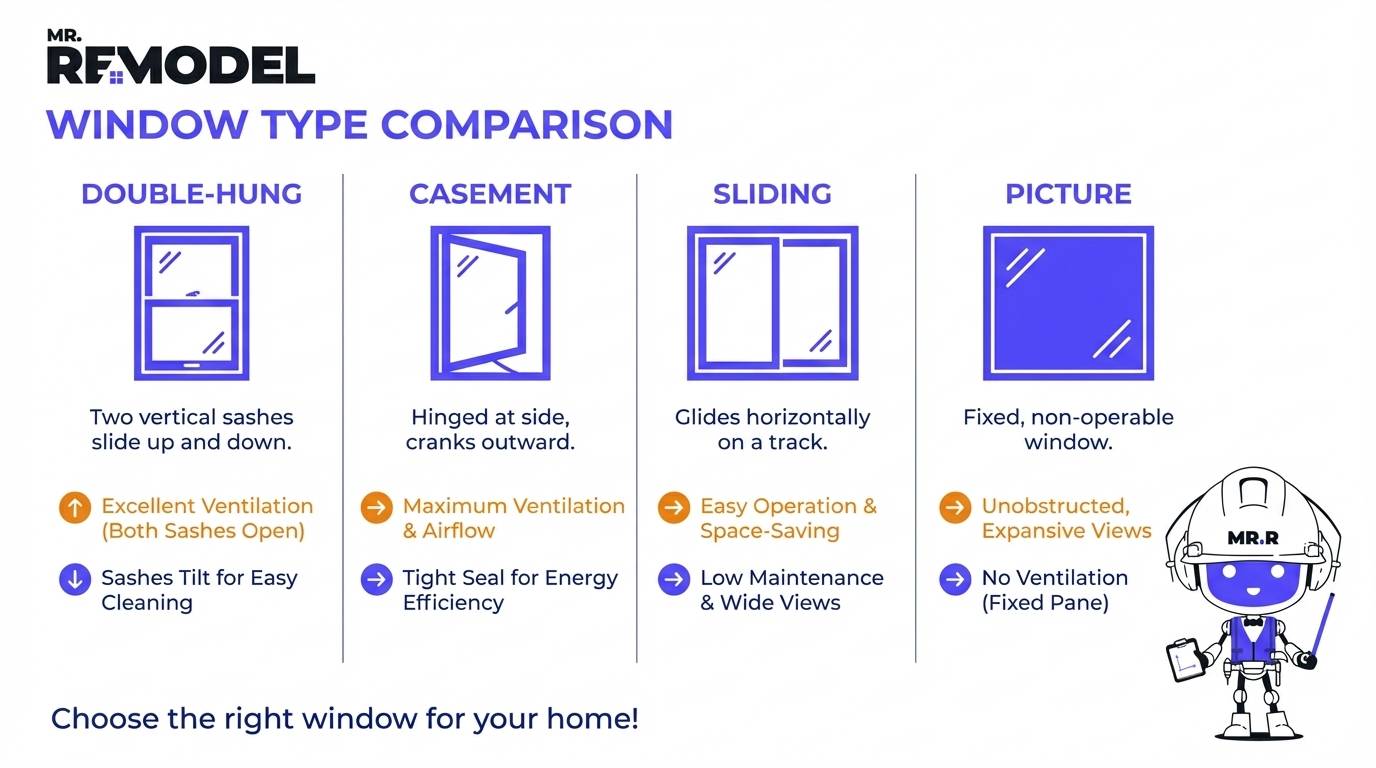
Double-Hung |
$800 to $1,100 |
Traditional look, easy to clean |
|
Casement |
$900 to $1,300 |
Best for coastal breezes and ventilation |
|
Sliding |
$700 to $1,000 |
Modern look, great for wide openings |
|
Picture |
$600 to $900 |
Maximum efficiency for views |
The 5-Window Strategy
Our internal data at Mr. Remodel shows that the average San Diego project covers five windows. If you cannot afford to replace every window in your home at once, we recommend a phased approach.
Start with the windows facing the ocean first, as these sustain the most salt damage. This allows you to secure your home’s perimeter in manageable batches while managing your cash flow.
Local Utility Rebates and Incentives
Before you sign a contract, check for local rebates. Organizations like SDG&E often provide residential energy solutions that include incentives for upgrading to high-efficiency windows. Additionally, the Center for Sustainable Energy provides resources for San Diego homeowners looking to improve their home’s thermal envelope.
Frequently Asked Questions
How often should I clean my coastal windows?
You should rinse your window frames and hardware with fresh water at least once a month. This prevents salt crystals from sitting on the surface and starting the corrosion process. A simple garden hose rinse is often enough to double the lifespan of your window hardware.
Do I really need a permit for window replacement in San Diego?
Yes, California state law requires a permit for window replacements. The good news is that the No-Plan process in San Diego makes this much easier than a standard remodel. Mr. Remodel can help you connect with contractors who handle the paperwork for you to ensure your home remains compliant and safe.
Which is better for the beach: vinyl or fiberglass?
Both are excellent, but fiberglass is generally considered the premium choice for direct oceanfront properties. It is slightly stronger and can be painted, whereas vinyl is usually limited to the colors provided by the manufacturer.
However, vinyl is more budget-friendly and still offers 100% salt resistance. Mr. Remodel partners with experts who can help you weigh these options based on your specific distance from the water.
Securing Your Coastal Home
Upgrading your windows in San Diego is about more than just aesthetics. It is a necessary defense against a corrosive environment. By choosing salt-resistant materials like vinyl or fiberglass, specifying Grade 316 stainless steel hardware, and utilizing the No-Plan permit process, you can protect your investment for decades to come.
Don't let corrosion compromise your home’s value. At Mr. Remodel, we specialize in connecting San Diego homeowners with top-tier local contractors who understand coastal requirements. Whether you need a full house replacement or a focused five-window upgrade, we can help you get started.
Get your free, no-obligation window replacement quote today.