1-855-QUOTEMR

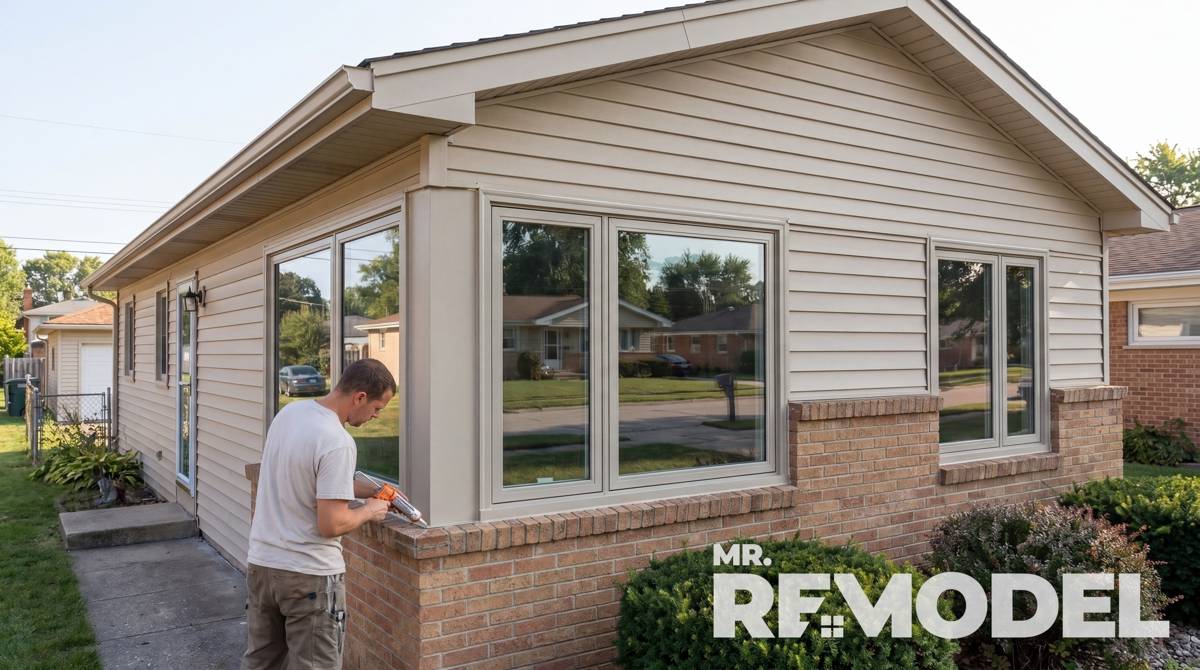
Table of Contents [hide]
Who This Is For
This comprehensive guide is written specifically for single-family homeowners suffering from disruptive environmental noise pollution, such as airport, transit, or highway traffic. If you want to understand acoustic engineering metrics, calculate material premiums, and prevent expensive structural air leaks, this data-backed breakdown is for you.
Key Takeaways
- The Acoustic Premium: Upgrading from standard residential glass to heavy acoustic laminated units increases the per-window material baseline from $2,896.70 up to $3,750 or more.
- The One Percent Rule: Acoustic insulation relies entirely on precision installation, as a tiny 1% structural air gap will instantly leak up to 50% of incoming exterior sound waves.
- STC Optimization: Professional acoustic window retrofits elevate your home's Sound Transmission Class rating from a weak 25 baseline up to an ultra-quiet 45 or higher.
- Dual Region ROI: Homeowners in coastal storm zones achieve doubled investment returns because thick acoustic laminated glass also functions as impact-resistant hurricane glass.
- Immediate Transactional Urgency: Internal user metrics show that 94.7% of property owners facing acute noise pain points are prepared to launch installations within 30 days.
Are you struggling to sleep due to relentless neighborhood traffic or overhead airport flight paths? Severe noise pollution causes constant frustration and actively diminishes your long-term quality of life.
According to noise control data from the Environmental Protection Agency (EPA Noise Pollution Guidelines), chronic urban noise exposure is a genuine public health hazard that triggers elevated stress levels and sleep disruption. Investing in structural noise abatement is essential to restore peace and protect your household.
However, generic home improvement sites often treat acoustic glass like a standard cosmetic update. At Mr. Remodel, we utilize proprietary project data to help you navigate the complex technical realities of professional soundproofing.
See Related: Energy Efficient Windows | 2026 Ratings, Costs & Savings Guide
The Economics of Noise Control: Standard vs. Acoustic Glass
Achieving true silence inside your home requires moving past standard double-pane window designs. Standard window units utilize symmetric glass thicknesses that easily vibrate in unison, allowing exterior sound frequencies to pass directly into your living spaces.
Acoustic engineering relies on asymmetric glass configurations and thick polyvinyl butyral (PVB) inner layers. This specialized plastic layer dampens passing sound waves, absorbing acoustic energy before it can vibrate the interior pane.
Our extensive market analytics reveal the exact financial adjustments required for these advanced systems. Review the data matrix below to compare standard installations against high-performance soundproof upgrades:
Decoding the Cost-to-STC Delta
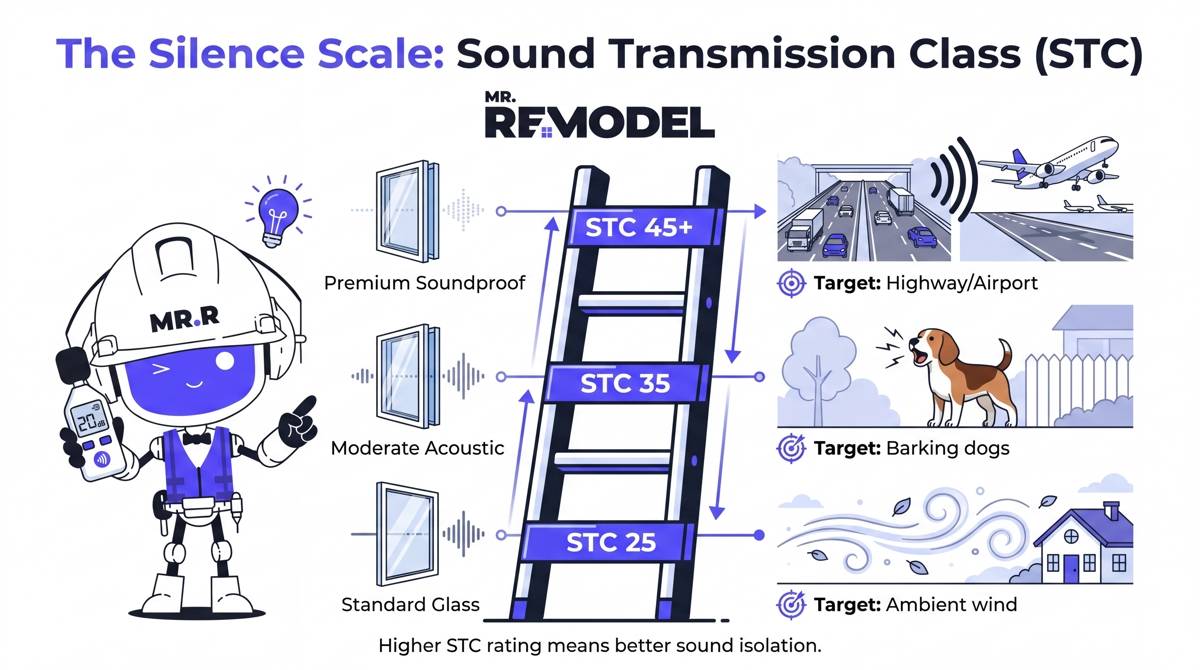
Sound Transmission Class (STC) is the industry standard scale used to measure a building component's resistance to airborne sound. Every single-digit increase in a window's STC rating represents a massive drop in perceived interior volume.
Our baseline data indicates that a standard residential window project costs an average of $2,896.70 per unit, delivering a low STC rating of 25 to 28. This tier stops standard outdoor air movement but fails to block heavy traffic.
Stepping up to a premium acoustic upgrade moves your property into the 35 to 45+ STC range. This extreme drop in volume requires a larger financial commitment, scaling from $3,750 to over $4,500 per window opening.
See Related: How Much Do New Windows Save on Cooling Bills | $16k Cost vs. ROI
The 30% Labor Baseline and the Precision Installation Factor
Homeowners often try to save money by purchasing acoustic glass online and handling the placement themselves. However, acoustic window retrofitting is an incredibly delicate process that leaves no room for error.
Our industry metrics confirm that labor typically accounts for roughly 30% of your total replacement window invoice. For a $4,000 acoustic window installation, approximately $1,200 is dedicated entirely to heavy structural framing and precision sealing.
The Fatal Consequence of Tiny Air Gaps
Acoustic energy flows through the path of least resistance like water. If a framing assembly contains even a microscopic opening, your entire soundproofing strategy will fail.
Technical briefs reveal that a tiny 1% structural air gap leaks up to 50% of incoming exterior noise. Bypassing certified specialists introduces massive performance risks that ruin your high-end material investment.
According to home insulation metrics from the Department of Energy Window Sealing Standards, precision backer rods and acoustic sealants are required to stop environmental leaks. Eliminating these structural openings simultaneously improves your thermal insulation and your interior acoustics.
The Real Risks of Self-Installation
Attempting to handle this complex engineering work without specialized mechanical training can damage your home's structural integrity. Improper anchoring allows heavy acoustic frames to sag over time, tearing the perimeter seal.
Accepting the severe risks of DIY window soundproofing often leaves homeowners with warped frames and ruined glass. Trusting uncertified labor can void your manufacturer's product warranties and leave your home exposed to weather leaks.
Regional Data Metrics and Multi-Benefit ROI
Noise pollution profiles shift dramatically depending on your state's urban density and local weather patterns. Our proprietary database tracks these local demands to ensure your project delivers the highest possible asset returns.
Our internal tracking indicates incredible transactional urgency among affected clients, with 94.7% of inquiries demanding full installation within 30 days. Homeowners facing acute sound pain points want immediate, permanent relief.
High-Volume Coastal Regions
Homeowners living in dense coastal areas experience unique dual-benefit performance advantages. The dense materials required for heavy noise control provide excellent defensive protection against extreme weather events.
For our 2,273 active leads in Florida, the heavy laminated glass needed for STC 40+ soundproofing simultaneously serves as impact-resistant hurricane glass. This overlap doubles the long-term return on your home improvement project.
See Related: Low-E Glass Explained | Low-E 366 vs. Passive Solar (2026)
Transit Corridors and Urban High-Rise Infill
Metropolitan areas featuring massive highway networks experience relentless ground vibrations. Property owners near these active transport lanes require specialized glazing layers to maintain reasonable interior comfort.
Our regional project database records 1,195 active leads in California and 753 leads in Washington, where projects average a $14.6k overall value. These homeowners utilize acoustic upgrades to isolate their living spaces from dense transit noise.
Federal Aviation Administration (FAA Noise Abatement Criteria) research tracks structural sound limits for residential areas near commercial runways. Installing certified acoustic glass is the single most effective way to protect properties sitting inside active flight paths.
See Related: Are Triple Pane Windows Worth It? | 2026 ROI & V7 Tax Credits
Stop suffering from constant street traffic and disruptive flights. Let Mr. Remodel connect you with fully insured regional acoustic specialists today. Request an immediate quote for premium residential window installation to reclaim your home's peace.
Frequently Asked Questions
What is the average cost of a professional soundproof window installation?
While standard home upgrades average $2,896.70 per window, a professional acoustic installation generally ranges from $3,750 to $4,500 per opening. True costs scale based on custom sizing and required STC metrics.
Why do soundproof windows cost more than standard double-pane glass?
Acoustic windows utilize asymmetric glass panes and specialized polyvinyl butyral plastic inner layers. These dense material layers are custom-engineered to disrupt and absorb passing sound waves efficiently.
Can a microscopic gap ruin my window's soundproofing performance?
Yes. Acoustic data demonstrates that a tiny 1% structural air gap can leak up to 50% of exterior noise into your home. Precision framing and professional sealants are mandatory to preserve noise reduction.
Do hurricane impact windows also provide home soundproofing?
Absolutely. The thick laminated safety glass required to stop flying storm debris matches the technical parameters of premium acoustic glass, instantly delivering an STC rating of 35 to 40+.
How quickly can a homeowner schedule an acoustic upgrade?
Our internal market data indicates a high 94.7% 30-day intent rate among applicants. Leading regional networks are fully optimized to deploy measurement technicians quickly to address acute noise complaints.
Protect Your Quiet Living Spaces and Home Equity
Upgrading to residential soundproof windows requires balancing a premium initial material investment against verified acoustic engineering standards. Preparing for the 30% professional labor cost baseline ensures your frames are perfectly sealed against environmental sound leaks.
By focusing on verified STC ratings and local multi-benefit advantages, you transform a necessary lifestyle upgrade into a reliable structural asset. Eliminating noise pollution protects your family's health and preserves your property equity.
Ready to secure a quiet, peaceful home environment? Mr. Remodel simplifies your upcoming renovation by providing clear cost data and matching you with premium local specialists. Get your free, no-obligation quote to connect with trusted local contractors and complete your upcoming window project with total peace of mind.