1-855-QUOTEMR

Table of Contents [hide]
Who This Is For
This guide is designed for homeowners, property investors, and renovation planners. It provides a data-driven reality check for those navigating the 2026 window market. Use this to move beyond "internet estimates" and into actionable project budgeting.
Key Takeaways
- Energy Impact: Windows account for 25% to 30% of residential heating and cooling energy use.
- National Averages: Expect to pay between $800 and $1,200 per window for standard installations in 2026.
- The Reality Gap: Premium, high-performance projects often average $2,585 per window when factoring in high-tier materials.
- Tax Incentives: The 25C tax credit offers 30% back on materials, capped at $600 annually for windows.
- Resale Velocity: Homes with updated windows sell approximately 8% faster than those with dated units.
- Volume Strategies: Most homeowners choose either a "Problem-Solver" 3-window fix or a "Whole-Home" 10-window replacement.
Did you know that heat gain and heat loss through windows are responsible for up to 30% of your home's energy consumption? According to the U.S. Department of Energy, this is one of the single largest sources of waste in the modern American household.
In 2026, the cost of doing nothing is higher than ever before. Rising utility rates mean that old, single-pane windows act like a constant drain on your bank account. Replacing these units is no longer just a cosmetic choice. It is a critical financial hedge against inflation.
Many homeowners start their journey looking for a cheap fix. However, the market has shifted. The focus has moved from the lowest initial price to the highest long-term value. This guide will show you exactly how to navigate that shift.
National Averages vs. Real-World Market Data
The most common question homeowners ask is simple: What does a window cost? While online searches suggest figures between $450 and $1,200, these starting points rarely reflect the total project cost in 2026.
.jpg)
According to proprietary Mr. Remodel transaction data from 2025 and 2026, real-world pricing is driven by several critical factors:
- Average Project Total: Our data shows the typical homeowner invests $16,511 per project.
- Comprehensive Pricing: This total includes professional labor, high-tier materials, and specialized installation techniques.
- The 10-Window Benchmark: For a standard 10-window replacement, the real-world average reaches $25,851.
- Unit Breakdown: This calculates to approximately $2,585 per window, reflecting a shift toward high-quality, durable solutions.
- The Premium Difference: These figures exceed national estimates because they include energy-efficient coatings and premium frames designed for longevity.
This data reflects a growing preference for doing it right once rather than settling for temporary budget fixes that fail prematurely. If you need a realistic price for your specific home, you can get a customized quote from Mr. Remodel.
See Related: Window Replacement Cost by Home Size
Window Cost Benchmarks
|
Metric |
National Budget Average |
Mr. Remodel Real-World Average |
|
Cost Per Window |
$800 to $1,200 |
$2,585 |
|
Total Project (10 Windows) |
$8,000 to $12,000 |
$25,851 |
|
Common Entry Point |
$3,000 (Small Repair) |
$16,511 (Mid-Range) |
|
Luxury Range |
$25,000+ |
$84,000+ |
Material Selection and Cost Drivers
The material you choose for your window frames is the primary driver of the final price. In 2026, vinyl remains the most popular choice due to its balance of cost and performance. However, fiberglass and composite materials are gaining ground in premium markets.
Vinyl Windows
Vinyl is the workhorse of the industry. It is low-maintenance and offers good insulation. Modern vinyl is designed to resist warping, though it may not perform as well as fiberglass in extreme temperature swings. Expect to pay on the lower end of the pricing spectrum.
Fiberglass and Composite
These materials are engineered for maximum durability. They expand and contract at nearly the same rate as glass. This reduces the risk of seal failure over time. While the upfront cost is higher, the longevity often makes them a better long-term investment for forever homes.
Wood Windows
Wood remains the aesthetic gold standard. It offers natural insulation and timeless beauty. However, it requires the most maintenance. Many homeowners in luxury markets like Otis or Denver choose wood windows for their high resale appeal and historic accuracy.
Cost Comparison by Material Type
|
Material |
Estimated Cost Per Window |
Lifespan Expectancy |
Maintenance Level |
|
Vinyl |
$450 to $950 |
20 to 30 Years |
Low |
|
Fiberglass |
$900 to $1,600 |
40 to 50 Years |
Low |
|
Wood |
$1,200 to $2,500 |
30 to 50 Years |
High |
|
Composite |
$1,100 to $2,000 |
40+ Years |
Very Low |
See Related: Vinyl vs Fiberglass Windows
The Volume Strategy: 3 Windows vs. 10 Windows
Our internal data reveals a fascinating pattern in how homeowners approach replacement. Most projects fall into two distinct categories: The Problem Solver and The Whole-Home Transformation. Understanding where you fit can help you budget more effectively.
The 3-Window Problem Solver
This strategy usually targets specific failure points. Perhaps a master bedroom is too drafty, or the front-facing windows have lost their curb appeal. These projects typically range from $3,000 to $7,000. It is an excellent way to address immediate comfort issues without a massive capital outlay.
The 10-Window Whole-Home Approach
This is the most common project size for homeowners looking to maximize energy efficiency. By replacing 10 or more windows at once, you can achieve a uniform look and a significant drop in utility bills. As noted, these projects often land around the $25,000 mark for high-quality installations.
.jpg)
Choosing the right volume is a strategic decision. Replacing windows in phases can help with cash flow. However, replacing them all at once often reduces the labor cost per unit. Contractors can streamline the setup and teardown process when working on a larger scale.
See Related: How Many Windows Should You Replace at Once
Local Market Extremes and Volatility
National averages often hide the reality of local markets. Our data saw massive variations in project totals based on geography, driven by several hyper-local factors:
- Local Labor Rates: Regional demand for skilled trades can significantly shift the cost of installation.
- Permitting Fees: Municipal requirements and specialized building codes vary by city and county.
- Climate Requirements: Areas prone to extreme weather require upgrades like impact-rated glass or high-altitude gas fills.
- High-Value Market Spikes: In markets like Otis, average projects reach $84,672 due to luxury materials like custom wood or steel.
- Value-Driven Markets: Conversely, regions like Gooding see projects closer to $19,000 for standard-sized, efficient upgrades.
This extreme volatility is why generic online calculators are often inaccurate. Whether you are in a coastal salt-spray zone or a high-elevation mountain region, your windows must be engineered for your specific environment.
Regional Market Spotlights
|
Market Location |
Average Project Total |
Market Characteristics |
|
Otis |
$84,672 |
Luxury, Custom, Multi-Story |
|
Klamath Falls |
$50,711 |
High-Efficiency, Climate-Focused |
|
Gooding |
$19,100 |
Value-Driven, Standard Sizes |
|
National Trend |
$16,511 |
Mid-Range Modernization |
See Related: Cost to Replace Windows by City
The ROI Equation: Resale Value & Energy Savings
Investing in windows is one of the few home improvements that pays you back in two ways: immediate monthly savings and long-term equity. In 2026, the real estate market places a high premium on energy-efficient upgrades.
Energy Savings and Tax Credits
By upgrading to ENERGY STAR Most Efficient certified windows, you can lower your energy bills by an average of 13% nationwide. Additionally, the federal government provides a direct incentive through the 25C tax credit.
.jpg)
Under the IRS Energy Efficient Home Improvement Credit, you can claim 30% of the material cost, up to $600 per year for windows. This makes high-performance glass more accessible than ever before. It is a simple way to reduce the effective price of your project.
Resale Velocity and Marketability
A full window replacement typically recoups between 67% and 85% of its cost at the time of sale. But there is a hidden benefit: marketability. Our data shows that homes with new windows spend 8% less time on the market.
Buyers in 2026 are wary of "deferred maintenance." Old windows are a major red flag that suggests a home has not been well-cared for. By replacing them, you remove a major hurdle for potential buyers. This often leads to higher, cleaner offers with fewer inspection-related price drops.
See Related: Window Replacement ROI Explained
Installation Types: Full Frame vs. Pocket
Not all installations are created equal. The method your contractor uses will significantly impact both the cost and the performance of your new windows. There are two primary paths: pocket installation and full-frame replacement.
Pocket Installation
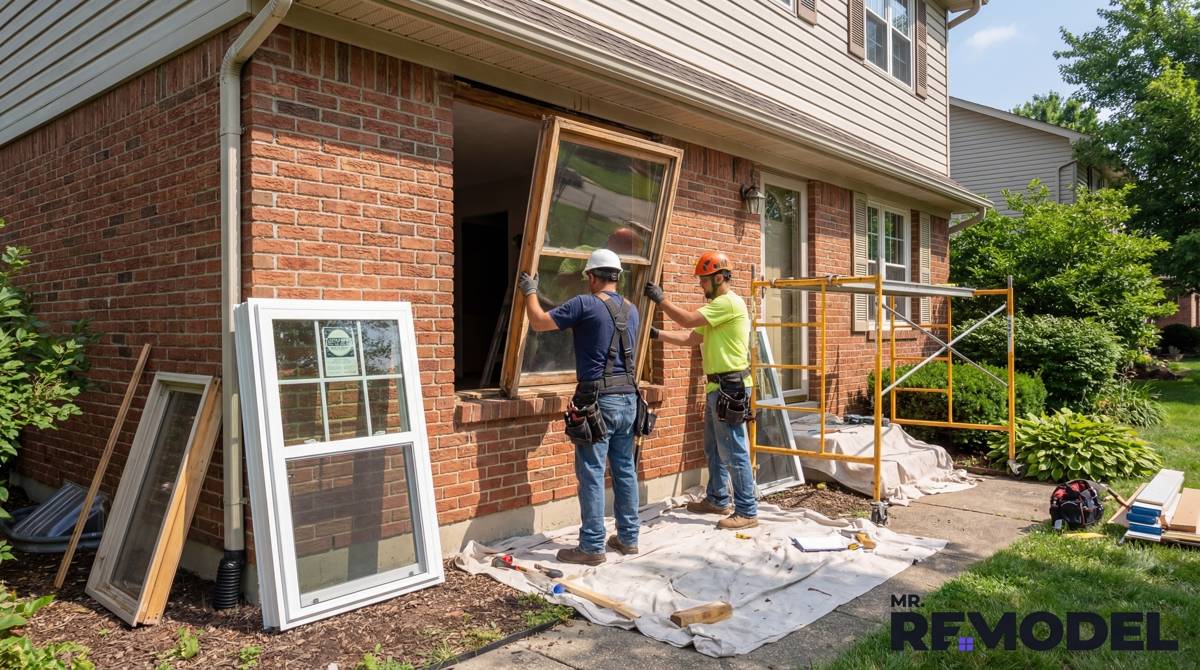
This method involves inserting a new window into the existing frame. It is faster and less invasive. Because it requires less labor and does not disturb the exterior siding or interior trim, it is the more affordable option. It is ideal if your current frames are still structurally sound.
Full-Frame Replacement
This is a more comprehensive approach. The entire window, including the frame and trim, is removed. This allows installers to inspect for rot and improve the insulation around the opening. While it costs more, it is the only way to ensure the best possible seal and long-term performance.
See Related: Pocket vs Full Frame Replacement
Budgeting and Financing for Your Window Replacement
With the average project cost sitting around $16,511, navigating the financial side of a replacement requires a clear strategy. In 2026, homeowners prioritize flexible payment structures to protect their cash flow while ensuring a high-quality result.
Consider these key financial pillars for your project:
- Standardized Financing: Most modern projects utilize flexible payment options. Many providers offer low-interest or same-as-cash programs that allow you to begin work immediately.
- The Contingency Buffer: Always set aside a 10% to 15% contingency fund. This covers unforeseen issues like hidden water damage or structural rot discovered during the tear-out phase.
- Installation Integrity: A window is only as good as its seal. Choosing a cut-rate installer to save money often leads to air leaks and voided manufacturer warranties.
- Long-Term Value Strategy: Financing a high-quality, professional installation is more cost-effective than paying cash for a substandard job that requires a total redo within five years.
Investing in professional labor ensures that your energy-efficient windows actually perform to their rated specifications. This protection of your investment is what separates a successful remodel from a costly mistake.
See Related: Financing Window Replacement
Comprehensive Window Cost FAQ
1. How much should I actually pay per window in 2026?
While national averages suggest $800 to $1,200, a high-quality, professionally installed window often costs between $1,500 and $2,500. This higher price point reflects the use of premium materials and expert labor.
2. Can I get a tax credit for window replacement this year?
Yes. The 25C tax credit allows you to claim 30% of the cost of ENERGY STAR-certified windows, up to a maximum of $600 per year. You should consult with a tax professional to maximize this benefit.
3. Does Mr. Remodel offer financing for window projects?
Yes. Mr. Remodel provides several flexible financing options to fit different budgets. This allows homeowners to address urgent replacement needs while spreading the cost over manageable monthly payments.
4. What is the most energy-efficient window material?
Fiberglass and composite frames generally offer the best thermal performance. When paired with triple-pane, Low-E glass, these units provide the highest level of insulation available on the market today.
5. How long does a typical window replacement project take?
Most residential projects can be completed in one to three days. The exact timeline depends on the number of windows and the complexity of the installation method chosen.
6. Why is the Mr. Remodel average higher than some online calculators?
Our data reflects real-world, full-service installations. Unlike basic calculators that may only estimate material costs, our figures include high-tier products, expert labor, warranties, and project management.
7. Should I replace all my windows at once?
Replacing all windows at once is the most cost-effective way to improve energy efficiency and curb appeal. However, if budget is a concern, many homeowners find success with a phased "3-window" strategy.
8. How do I know if my windows need to be replaced?
Common signs include visible condensation between panes, drafts, high energy bills, and difficulty opening or closing the sashes. If your windows are more than 20 years old, they likely lack modern efficiency features.
9. Will new windows really increase my home's value?
Absolutely. New windows provide a strong ROI and significantly improve curb appeal. They are often cited as one of the top features buyers look for in a modernized home.
10. Does Mr. Remodel provide free quotes?
Yes. We offer free, no-obligation quotes that provide a detailed breakdown of your project. We connect you with local experts to ensure your estimate is accurate for your specific market.
Securing Your Home’s Future
Window replacement is a major undertaking, but it is one of the most rewarding investments a homeowner can make. In 2026, the combination of energy savings, tax incentives, and increased property value makes this upgrade a strategic financial move.
Moving from a house that "leaks" money to one that is a sealed, comfortable sanctuary is a transformative experience. By choosing high-quality materials and professional installation, you ensure that your home remains protected and efficient for decades to come.
Don't settle for "guestimates" or low-ball quotes that cut corners. Your home deserves a solution that lasts. Trust the data, understand the real-world costs, and take the first step toward a more efficient future today.
Ready to see the Mr. Remodel difference? Get your free, local quote today and let us connect you with the top window professionals in your area.