1-855-QUOTEMR

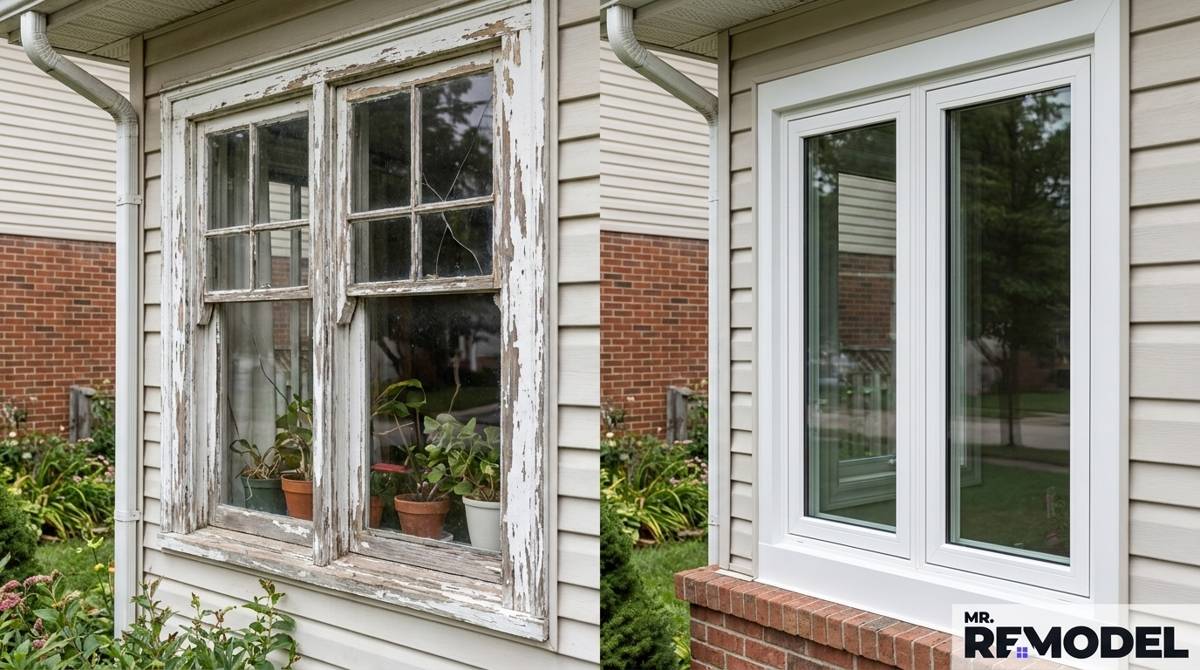
Table of Contents [hide]
Who This Is For
This guide is designed for high-intent homeowners who have committed to replacing their windows but are stuck choosing between mass-market vinyl and premium wood frames.
Key Takeaways
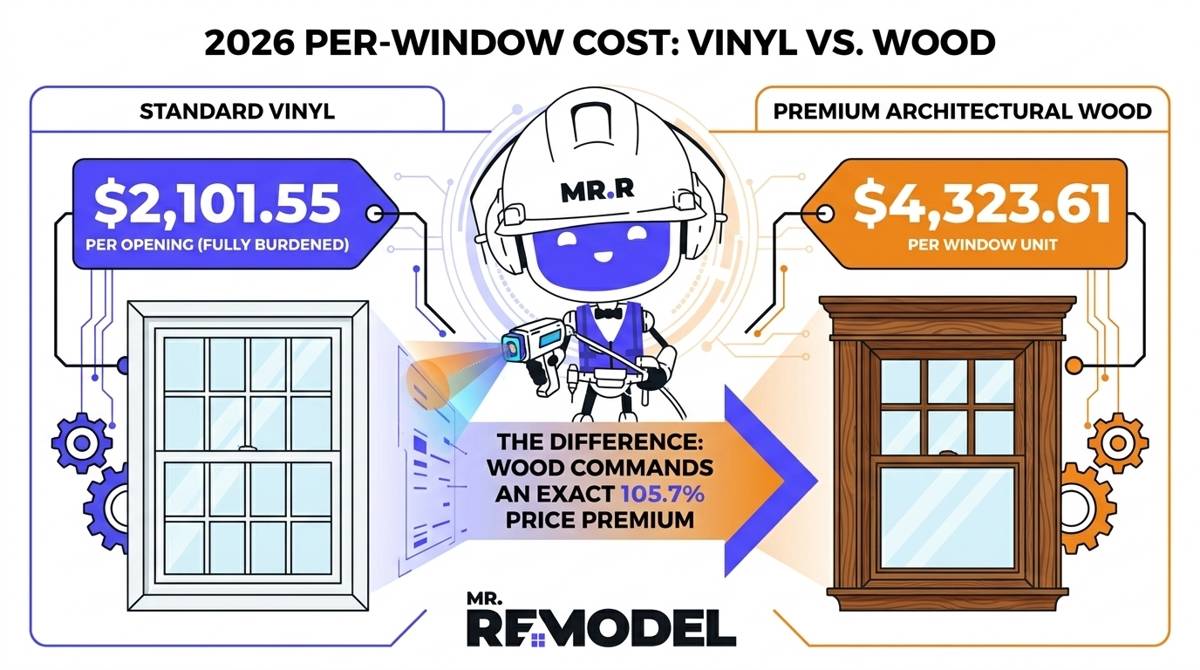
- Vinyl Price Points: A standard high-efficiency vinyl replacement costs an average of $2,101.55 per opening.
- Wood Structural Costs: Premium architectural wood-clad systems command $4,323.61 per window unit.
- Project Scale Multipliers: Upgrading from standard vinyl to custom wood shifts the average six-window project baseline from $12,014.50 to $30,001.35.
- Labor Cost Drivers: Premium wood options carry an exact 105.7% cost premium due to custom structural framing, intensive sizing, and specialist labor.
- Regional Building Codes: Climatic demands and strict historic preservation guidelines heavily dictate material selection across states like New York and California.
Homeowners exploring wood or vinyl windows face a major financial decision. Blind selection can lead to budget issues if structural modifications are required. Closed-won project data from 27,295 real inquiries reveals that standard vinyl and premium wood serve entirely different financial paths.
Navigating this upgrade requires transparent market analysis instead of manufacturer sales pitches. The connection network at Mr. Remodel protects homeowners by matching them with top-tier local specialists who offer balanced estimates. By anchoring your budget in real project data, you can safeguard your architectural envelope.
The Per-Window Cost Matrix
Evaluating window materials in a vacuum often leads to budgeting mistakes during home upgrades. True project data proves that a standard high-efficiency vinyl replacement costs an average of $2,101.55 fully burdened. Conversely, premium architectural wood-clad systems command a substantial $4,323.61 per structural opening.
Breaking Down the Price Variance
This represents an exact 105.7% price premium for custom wood options over mass-market vinyl lines. This variance is driven by intensive structural sizing, custom frame modifications, advanced moisture barriers, and specialist finish labor. Investing in wood upgrades your home equity, while vinyl maximizes immediate savings.
See Related: Window Costs and Value | Real Project Data & ROI Guide
The Six-Window Project Scale Multiplier
Property owners frequently make the mistake of assuming a material upgrade only adds a minor premium to the total bill. While initial inquiries average 5.88 units, professional onsite framing evaluations typically scale the final contracted job to an average of 6.06 units as structural framing blocks are properly measured.
Real-World Renovation Math
Because the average residential project scales to six total units, opting for custom wood-clad framing over standard vinyl completely transforms your capital layout. Choosing vinyl sets a project baseline of $12,014.50. Upgrading the entire system to architectural wood-clad units drives the real-world valuation up to $30,001.35.
Before committing to a contract, ensure you explore every material option for your home layout. You can easily access expert window replacement services through our vetted database to find local experts who provide side-by-side estimates, helping you get a precise project quote.
See Related: Window Replacement Permits & Inspections Guide | Mr. Remodel
Climate Vectors and Regional Code Mandates
Your geographic location dictates material survival and legal compliance far more than personal aesthetic taste. Different climates impose specific structural demands on your thermal envelope, forcing distinct selections across high-volume states.
Northeast Historic Preservation Rules
In states like New York, local historic preservation rules often mandate custom wood restorations. Homeowners must follow specific guidelines from the National Park Service to maintain the original neighborhood character and structural architectural integrity.
West Coast Efficiency Standards
In California, rigid Title 24 efficiency standards regulate your thermal boundaries. Material data from the Lawrence Berkeley National Laboratory shows that both multi-chambered vinyl and advanced wood-clad frames comply, shifting the decision from efficiency to pure equity.
Southern UV and Weather Deflection
Across Texas and Florida, severe UV rays and coastal salt rules demand tough, low-maintenance materials. According to the U.S. Department of Energy, premium vinyl offers ultimate thermal insulation and structural resistance without rotting over time.
See Related: Best Window Frame by Climate: Cost & Performance Guide
Frequently Asked Questions
Do wood windows last longer than high-grade vinyl options?
Premium wood-clad windows can last over thirty years if they receive diligent maintenance and proper exterior sealing. High-grade vinyl options typically last twenty to twenty-five years without requiring any painting, making them a highly resilient, zero-maintenance choice for busy homeowners.
Why do historic districts ban vinyl window installations?
Historic commissions enforce strict visual compliance to preserve original neighborhood character. Modern vinyl frames often feature different shadow lines and thickness profiles than historic wood sashes, making custom wood replacements a legal necessity in protected preservation zones.
How does humidity impact wood frame performance?
Wood is a natural material that inherently absorbs and releases environmental moisture. This process causes frames to expand and contract throughout changing seasons, which can lead to binding or operational stickiness if the units are not calibrated by experienced framing professionals.
Final Verdict on Your 2026 Window Investment
Balancing immediate project costs against long-term property equity requires a clear look at true, data-backed regional metrics before making a final commitment. Since 60.10% of homeowners operate on a stable, thirty-day planning track, taking your time to review an itemized structural audit is a smart strategy.
Avoid letting an independent contractor pressure you into a single proprietary product line that may not fit your local climate requirements. Reach out to the Mr. Remodel connection database today to match with vetted local specialists.
Get your free, no-obligation quote now to launch your structural upgrade with total confidence.